- L-Plate Retiree
- Posts
- BlackRock Says Index Funds Aren't Enough. Ask Who Gets Paid.
BlackRock Says Index Funds Aren't Enough. Ask Who Gets Paid.
BlackRock says market concentration and longer retirements have broken buy-and-hold. Its diagnosis is sound. Its prescription costs you more.
Sponsored by


because retirement doesn’t come with a manual
What are your solutions to the risks mentioned in the article? If you cannot beat what a concentrated S&P500 can achieve, you are still better off with an Index ETF. Though I just learnt that, historically, 100% of all net wealth created in the US Stock Market has come from just 3.44% of companies.
CS

Trump reinstated the Hormuz blockade. Oil climbed. Chips slid. The Nasdaq fell six times harder than the Dow.
The quick scan: Monday opened a busy week badly. Trump announced on Truth Social that the US was reinstating a blockade on Iranian shipping through the Strait of Hormuz. Oil rose. Semiconductors were hammered, led by a 9.3% collapse in SK Hynix. Energy names cushioned the Dow, which barely flinched. The Nasdaq got no such protection. Today's article, on BlackRock and the problem of index concentration, could not have landed in a better session.
S&P 500: -0.79% to 7,515.34 – handed back Friday's 0.42% gain and then some; the damage was concentrated in AI and semiconductor names rather than spread across the market
Dow Jones: -0.26% to 52,498.64 – down 138.37 points, the mildest of the three; rising oil lifted energy components, which absorbed much of the blow
NASDAQ: -1.55% to 25,873.18 – the worst hit by a distance; SK Hynix tumbled 9.32% and Samsung Electronics followed, dragging the whole semiconductor complex down with them. Apple was a rare green shoot, up 0.74%.
What's driving it: Two forces, pulling in different directions. The geopolitical one is simple enough. A reinstated blockade on Iranian shipping through Hormuz puts a risk premium back into oil, which is good for energy stocks and unhelpful for nearly everything else.
The second force is the more interesting one. The selling was not broad. It was aimed squarely at AI and semiconductor names, the exact companies that have carried the major indexes for two years. When those names catch cold, the S&P 500 sneezes, because they are a disproportionate share of it.
Earnings season also arrives against a demanding backdrop. CFRA's Sam Stovall notes that second-quarter EPS is forecast to rise 20.9% year on year, well above the post-2009 quarterly average of 11.6%, with the S&P trading at a forward price-to-earnings ratio of 21.3.
Bottom line: Monday was BlackRock's argument, delivered live. Concentration is not a theory. The Nasdaq fell 1.55% while the Dow fell 0.26% in the same session, and the gap had almost nothing to do with the news and almost everything to do with which companies each index leans on. If your broadly diversified S&P 500 fund moved more than a diversified fund should, you have just been shown the thing today's article describes. What follows is a question about diversification and cost, not an invitation to buy something expensive.
Stop Reading About AI. Start Getting Results From It.
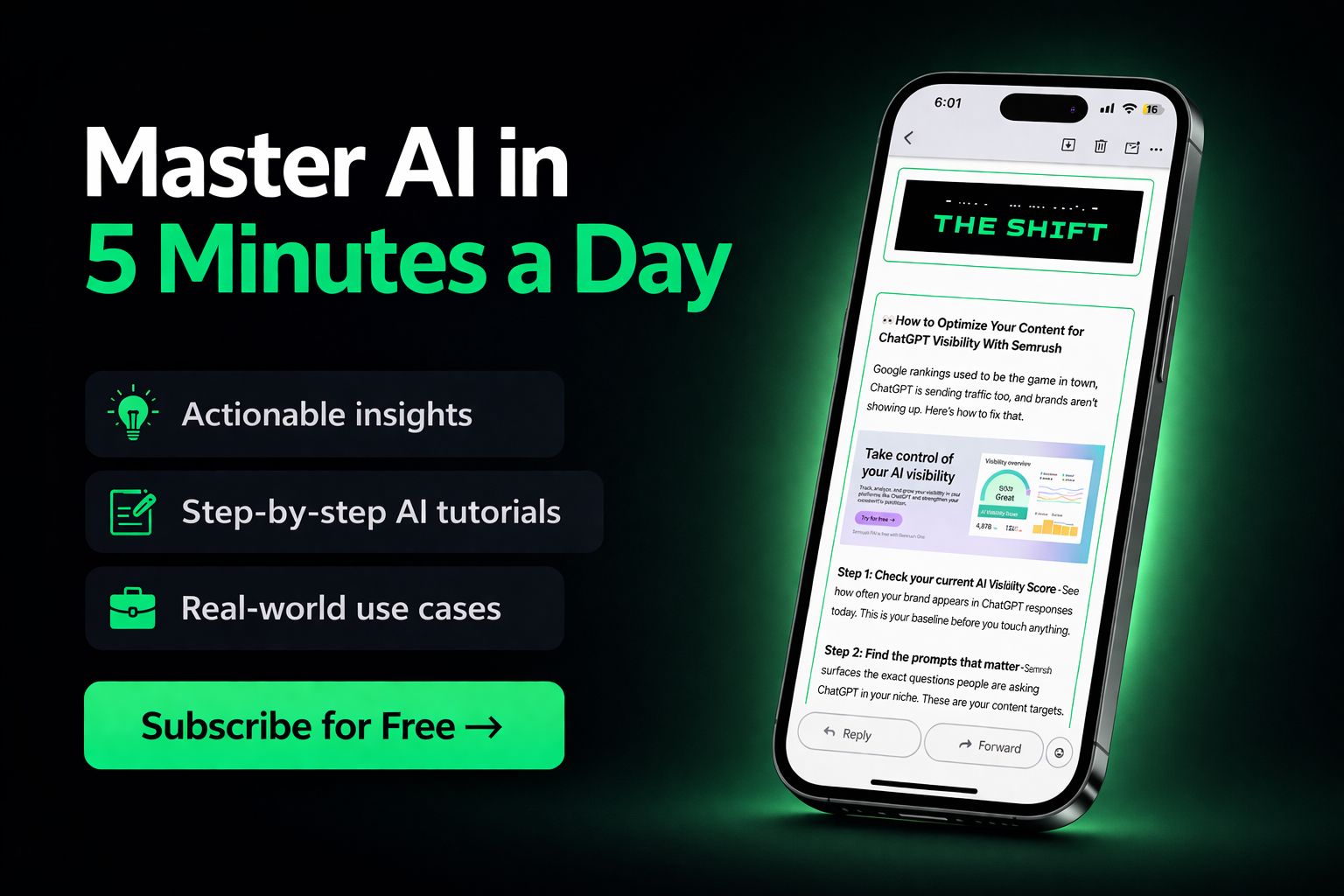
AI is everywhere, but practical, actionable ways to use it are really rare to find.
The Shift fixes this with focus on a single topic per edition. A real problem AI can solve today.
You’ll see real examples, short workflows, and proven prompts that help you work faster, think better, and automate intelligently under 5 minutes a day.
Once you subscribe, you get access to 3,000+ curated AI tools and 1000+ prompts, so nothing stays theoretical.
If you want AI to work for you in real practical ways, not just ideas, you’ll love The Shift.
And right now, 3 subscribers win a free 1-year Claude Pro subscription. One click to enter.

Who Gets Paid If You Believe Index Funds Aren't Enough?

The scoop: About $5.5 trillion of the world's savings currently sits inside BlackRock's iShares index funds. The firm manages close to $14 trillion in total. Both numbers were built, in large part, on one gloriously unglamorous idea: buy the whole market, keep the fees low, resist the urge to be clever.
Which is why it is worth sitting up when that same firm announces that buying and holding an index fund is no longer enough for retirement.
Nick Nefouse, BlackRock's global head of retirement solutions, told Bloomberg that "there needs to be an evolution away from this being indexed only." Markets, he argued, have reached a point that calls for more oversight.
If you have spent twenty years quietly doing the boring thing, that sentence lands somewhere between a warning and an accusation. Before you act on it, it helps to pull the claim apart into three pieces: the diagnosis, the prescription, and the person writing the prescription.
The diagnosis is not wrong.
BlackRock's argument rests on three trends, and none of them are invented.
Market concentration is real. A handful of very large technology companies have driven an outsized share of index gains, which means the "diversified" fund in your account is more top-heavy than it looks. You can own five hundred companies and still be making a fairly concentrated bet.
Volatility is real. Geopolitics, inflation cycles and interest rate uncertainty have made the ride bumpier than anyone was promising a decade ago.
And longevity is real. Average American life expectancy sits around 79 years, and a good number of readers here will comfortably sail past it. A portfolio built to grow is not the same thing as a portfolio built to pay you every month for thirty years. BlackRock's phrase for what retirees actually want is a "paycheck for life". That is not marketing. That is the job.
So far, so reasonable. Roughly 4% of US 401(k) plans now offer a target-date fund with an annuity attached, and Vanguard and Fidelity are moving the same way.
Now look at the prescription.
Here is where the argument takes a leap. From "the index is top-heavy and retirements are long", BlackRock arrives at: your retirement account should hold private credit, infrastructure and private equity.
Notice what just happened. A problem that could be addressed with cheap, dull, well-understood tools has been answered with expensive, complex, hard-to-value ones.
Notice, too, who is paid more when that happens.
Index funds typically charge somewhere between 0.03% and 0.2% a year. Actively managed funds charge 0.5% to 1.5%, and often more. Private-market products sit further up that ladder again. BlackRock is not a charity and has never claimed to be. It is a listed company with shareholders, and its lowest-margin business is precisely the one it is now inviting you to outgrow.
The arithmetic nobody puts in the sales deck.
The most useful thing in the whole article is a piece of arithmetic that quietly undermines its own headline. Take $100,000. Earn 7% a year. Leave it alone for 30 years.
At a 0.1% annual fee, you finish with roughly $739,000.
At a 1% annual fee, you finish with roughly $574,300.
Same market. Same returns. Same patience. A gap of $164,700, taken entirely by cost.
Read that twice. Compounding is indifferent to where the drag comes from. It grinds either way, and the fee grinds every single year, including the good ones.
And what do the fees buy? By Morningstar's count, only 38% of US actively managed funds beat their average indexed peers in 2025. Burton Malkiel has been making the same argument for half a century in A Random Walk Down Wall Street: roughly two-thirds of professionally managed funds are regularly outperformed by a plain capitalisation-weighted index fund carrying equivalent risk.
The tell is printed on the page.
Open the original article and you will find this argument surrounded by pitches for fractional rental property, fractional fine art and gold retirement accounts. The publisher discloses, in the fine print, that it earns commission on those links.
We are not recommending a single one of them. We are pointing at them, because the page is an almost perfect demonstration of its own thesis. The moment somebody tells you the simple thing has stopped working, look at what is being sold on the same page. You will rarely have to look far.
The principle that outlives the news cycle.
Strip away BlackRock, the gold, the Basquiats, the whole 2026 packaging, and what remains is a question you can carry into every piece of financial advice you will ever be handed.
Who gets paid if I believe this?
That is not cynicism, and it does not mean the advice is wrong. Sometimes the person with something to sell is also telling you the truth. But knowing who benefits tells you how hard to squeeze an argument before you swallow it.
The second question follows from the first. Is there a cheaper, simpler way to solve the same problem? Concentration can be met by broadening what you own. Longevity can be met by planning how you draw down. Volatility can be met by holding enough cash that you are never forced to sell in a bad year. None of these require private equity. None of them generate much revenue for anyone, which is exactly why nobody is running a marketing campaign for them.
Index investing was never a magic trick. It was a modest bet that costs are certain while returns are not, and that the certain thing is the one worth controlling. That bet has not been repealed. It has simply become less profitable for the people selling you the alternative.
Actionable Takeaways for L-Plate Retirees:
Ask "who gets paid if I believe this?" before acting on any financial advice, including ours. Every recommendation arrives attached to somebody's incentive. The question is not whether an incentive exists, because one always does. The question is whether the advice still holds up once you can see it.
Treat complexity as a fee in disguise. Private credit, infrastructure and private equity are not evil, but they are opaque, illiquid and expensive. Each of those is a reason for caution, not a reason to be impressed. If you cannot explain how a product makes money in one sentence, you are not the one being paid.
Do a fee audit this month. Pull up every fund you own and write down its expense ratio. Add it up. Then run the numbers on what that percentage costs you across the years you have left. The article's own example puts a 0.9 percentage point difference at $164,700 over 30 years on a $100,000 balance. Fees are the only variable in investing you get to control with certainty.
Accept the diagnosis, reject the packaging. Concentration risk in a top-heavy index is a genuine issue. So is drawing an income for three decades. Both can be addressed without a single alternative asset: broaden your holdings, hold a cash buffer so you are never a forced seller, and build a withdrawal plan rather than a pile.
Be especially wary when the alternative promises returns that sound like certainties. The pages that surround this kind of article tend to advertise double-digit returns with reassuring floors attached. Nothing in markets works that way. If it did, the people selling it would keep it for themselves rather than fractionalise it and sell it to retirees.
Your Turn:
Look at the funds you hold: do you actually know what you are paying in fees each year, or is it a number you have never once looked up?
BlackRock's concerns about concentration and longevity are legitimate. Setting aside what they are selling, have you done anything about either one in your own portfolio?
When was the last time you changed a financial decision because of an article, and if you went back to it now, could you work out who was paid for you to read it?
👉 Hit reply and share your thoughts – your answers could inspire fellow readers in future issues.
If today's issue helped you see why "index funds aren't enough" sounds different once you notice who is saying it, consider supporting L-Plate Retiree on Ko-fi.
Resources:
The Next Level Options (NLOMBA) course is a solid, all-in-one roadmap for mastering options investing. You’ll learn what options really are, how to invest in different market conditions, and how to pick strong companies using Buffett-inspired fundamentals.
Inside, the lessons walk you step-by-step through strategies like BOSS and Strategy X, so you’re not guessing – you’re following a proven structure that helps you invest with clarity and confidence.
What to see everything that’s included?
👉 Check out the Options Workshop
The Future Today: From the president of OpenAI to the CEO of Google, we talk to the actual people changing the world with AI. And then we put all of their insights, advice, and business ingenuity into our newsletter. Join 75K Readers →
If these insights resonate with you, you’re in the right place. The L-Plate Retiree community is just beginning, and we’re figuring this out together-no pretence, no judgment, just honest conversation about navigating this next chapter.
Subscribe now to receive daily insights, practical tips, and the occasional laugh to help you thrive in retirement. We speak human here-no jargon without explanation, no assuming you’ve been investing since kindergarten.
And if today’s investing note hit the spot, you can buy us a coffee on Ko-fi ☕. Consider it your safest trade of the week-low risk, high return (in good vibes).
Because retirement doesn’t come with a manual… but now it does come with this newsletter.
The L-Plate Retiree Team
(Disclaimer: While we love a good laugh, the information in this newsletter is for general informational and entertainment purposes only, and does not constitute financial, health, or any other professional advice. Always consult with a qualified professional before making any decisions about your retirement, finances, or health.)
Reply