- L-Plate Retiree
- Posts
- Early Retirement and Cognitive Decline: What the Research Now Shows
Early Retirement and Cognitive Decline: What the Research Now Shows
A new NBER study of 40,000 Americans proves the link: leaving employment early doesn't just cost you money – it may cost you your mind.
In partnership with


because retirement doesn’t come with a manual
The key is NOT that retirement is bad for the brain, but retirement without cognitive engagement. Maybe it’s time to initiate that weekly Games Night with your fellow retirees?
CS

Trump said strikes on Iran might resume. Markets fell 2%, then climbed back – and the Dow finished green.
The quick scan: Tuesday was the most volatile intraday session in weeks. News broke midday that Iran had targeted a US helicopter, and Trump responded by indicating that kinetic strikes could resume. The S&P 500 fell as much as 2% on the headlines. Then, as the afternoon progressed without a formal announcement of resumed strikes, markets partially recovered. The Dow finished in the green. The NASDAQ bore the worst of the selling and couldn't claw it back.
S&P 500: -0.26%, 7,386.65 – A modest net decline that doesn't reflect the day's drama; technology and energy were the only two sectors finishing in the red
Dow Jones: +0.17%, 50,872.11 – The Dow's lower technology weighting insulated it from the selloff; advanced 86 points on the day despite the volatility
NASDAQ: -0.97%, 25,678.82 – The worst of the three; chip stocks led losses as geopolitical risk repriced the growth trade again. The NASDAQ-100 fell 1.12%.
What's driving it: The Iran-helicopter incident and Trump's response rattled markets that had been cautiously recovering from last week's jobs-report selloff. With oil already elevated and the Fed rate-hike scenario live, any renewed military escalation threatens the inflation-easing narrative that markets have been pricing in since the ceasefire extension. The partial intraday recovery – with more than half the market finishing in the green – suggests investors are not yet fully pricing in a return to full-scale conflict, but the volatility spike is a reminder that the situation remains unresolved. The VIX remains elevated at around 18–19.
Bottom line: Two sharp intraday moves in a single session – down 2%, back to near flat – is the kind of day that separates investors with a written plan from those reacting to a screen. For L-Plate Retirees, the Iran situation and the rate environment are the two variables still generating genuine uncertainty. Neither has been resolved. A diversified, liquidity-buffered portfolio with no forced selling requirements is the best structural response to exactly this kind of session.
Gray Hair and Beard? One Spray. No Dye. No Mess.

Most gray hair solutions only work on your head. Or they're designed for women. Or they're dye — which means gray roots, a bad smell, and a hairline that stops looking real. Particle Anti-Gray Serum is different. One product, five seconds a day, works on both hair and beard. It targets the root cause of graying and gradually restores your natural color — no dye, no mess, no routine that takes over your morning. Results that look natural because they are. Thirty-day money-back guarantee. Over a million men trust Particle. Get 20% off and free shipping now with code BH20.

Retiring Early Might Be Shrinking Your Brain. Here's What the Research Says

continuing work provides the much needed cognitive engagement
The scoop: While economists have spent recent years worried about Gen Z unemployment, a new study is pointing at a different generation and a different kind of problem.
About 35% of workers who have been unemployed for more than 24 weeks are over the age of 55. Over the past 35 years, the retirement age for men has gotten progressively younger. About half of current retirees say they made the choice to stop working – but for many, that choice was shaped by job loss, health, or a labour market that stopped making room for older workers.
The financial consequences of this trend are well-documented. Few retirees have a pension beyond Social Security, whose average benefit sits at around $18,000 per year. Retiring at 62 rather than 70 locks in permanently lower Social Security payments. The retirement savings gap is real and widely discussed.
What has been less discussed – until now – is what leaving the workforce does to the brain.
From correlation to causation
Previous research had established a correlation between early retirement and cognitive decline. But correlation isn't causation, and critics rightly pointed out that the relationship could run in both directions: cognitive decline might cause early retirement, rather than early retirement causing cognitive decline.
A new working paper from the National Bureau of Economic Research, authored by economists at the University of California at Irvine, set out to resolve that question. Using data from 40,000 participants in the University of Michigan's Health and Retirement Study – a longitudinal study tracking cognitive ability over time – the researchers overlaid their findings with US Census County Business Patterns data to examine what happened to cognitive scores following large labour demand shocks: periods when employment in a given area fell sharply for economic reasons unrelated to individual health.
The findings establish a causal relationship. Leaving employment led to cognitive decline. Consistent employment caused greater sustained cognition. The direction of causation runs from work to brain function, not the other way around.
"This would be yet another reason to say, 'We should really think about the potential consequences of a really large-scale decline in employment,'" David Neumark, a UC Irvine professor of economics and study co-author, told Fortune. "That's probably the group for whom this might be more serious."
Why work protects the brain
The mechanism isn't mysterious once you know where to look.
Work provides what neuroscientists call cognitive engagement – sustained, purposeful mental activity that requires attention, problem-solving, memory, and social interaction. The brain, like the body, responds to demand: it maintains the neural pathways that are regularly used and allows those that aren't to atrophy. Employment, for most people, provides a daily load of cognitive demand that retirement does not automatically replace.
This connects directly to what this newsletter covered in the Alzheimer's research issue last month: purposeful activity, social connection, and cognitive challenge are among the most consistently well-evidenced protective factors against dementia. Work, when it engages these dimensions, is essentially a daily cognitive workout – one that retirement removes without most people having a plan to replace it.
The financial dimension amplifies the health dimension. The long-term costs of cognitive decline are extraordinary. Alzheimer's disease and related dementias cost the US economy an estimated $781 billion in 2025, according to analysis from the University of Southern California. That includes direct care costs and lost earnings from patients and caregivers. The Alzheimer's Association's narrower projection for direct health and long-term-care costs alone runs to $384–$409 billion for 2025–2026, with an additional $413.5 billion in unpaid caregiving. "Cognitive decline is really expensive," Neumark said simply.
And cognitive decline is a condition people often live with for years – it is not typically what kills them. Extended care costs fall on families, government, and health systems simultaneously.
The policy dimension
Neumark's concern is partly about individual wellbeing and partly about a structural economic problem. An ageing population leaving the workforce earlier than necessary has two parallel effects: it reduces economic output and it increases demand for costly cognitive care.
He called for proactive employment policies to keep older workers engaged: flexible hours, phased retirement programmes, more accommodating workplaces. He also pointed out that about 28% of Social Security Disability Insurance recipients attempt to return to work within 10 years – suggesting that some people who leave the workforce early do so in circumstances they would prefer to change, if the conditions existed.
For individuals, Neumark said, greater awareness of the cognitive downside of leaving employment early could itself be a motivating factor. "We have some influence on the margins about both people losing jobs and things we might do to help them find reemployment if they did."
What this means for the L-Plate Retiree audience
The Fortune article focuses on Gen X – those currently in their late 40s to early 60s – and the involuntary nature of much of the early exit from employment. But the research findings apply broadly to anyone approaching retirement, regardless of whether their exit is chosen or forced.
The implication is not that retirement is bad for your brain. It is that retirement without cognitive engagement is. The research establishes the importance of work as a source of that engagement – but work is not the only source available. Volunteering, encore careers, continued learning, complex creative projects, sustained social interaction, and mentally demanding hobbies can all provide the cognitive load that protects brain function.
The critical word is "sustained." Occasional engagement is not the same as daily demand. The brain responds to what it is required to do regularly, not what it does sometimes. A retirement plan that includes a genuine cognitive challenge – something that requires sustained mental effort and isn't simply passive consumption – is meaningfully different from one that doesn't.
This is the planning gap the research is pointing at. Not the financial plan. The cognitive plan.
Actionable Takeaways for L-Plate Retirees
Don't treat retirement as the end of cognitive engagement – treat it as the beginning of a new source of it. The research confirms that employment protects brain function. If you're leaving employment, the question to answer is: what will provide the sustained cognitive challenge that work provided? Not occasionally – regularly.
Volunteer, mentor, consult, or teach. These activities provide the social interaction, purposeful engagement, and cognitive demand that research consistently links to slower cognitive decline. A regular commitment at a food rescue organisation, a mentoring programme, or a community board all carry the same cognitive load as work – without the commute.
Be specific about what "staying mentally active" means. Watching documentaries, reading, and doing the crossword are fine – but they are passive consumption or isolated cognitive tasks. Activities that require memory, problem-solving, social interaction, and adaptability under mild pressure – a regular card game, a language class, a part-time consulting project – are more closely analogous to what work provides.
If early retirement is involuntary, treat re-engagement as a health priority. The study focuses partly on workers who leave employment through job loss or labour market changes rather than by choice. If your exit from the workforce is not fully voluntary, the cognitive risk is real and the response – finding paid or unpaid cognitive engagement – is a health intervention, not just a quality-of-life one.
Build the cognitive plan before you retire, not after. The same logic that applies to social networks and financial plans applies here: the transition is smoother when the cognitive replacement is already in place. Starting a new intellectual commitment, community role, or learning project while still employed means the cognitive engagement continues without interruption.
Consider the research when evaluating "how early is too early." The financial calculus of early retirement is well-understood. Add the cognitive calculus: each additional year of meaningful employment is not just income – it's also neural maintenance. That doesn't mean working longer than you need to. It means understanding the full cost of leaving early.
Your Turn:
Before reading today's issue, had you considered cognitive decline as a specific risk associated with early retirement – or did the risk feel more financial than neurological?
The research distinguishes between leaving work voluntarily and being pushed out by labour market conditions. If you're approaching retirement, which description feels more accurate for your situation – and does that change how you think about the transition?
If retirement removed the daily cognitive engagement that work currently provides, what would you replace it with – and is that replacement already in place, or still theoretical?
👉 Hit reply and share your thoughts – your answers could inspire fellow readers in future issues.
Writing this takes considerably more time than drinking coffee. If you'd like to help balance that equation, consider shouting L-Plate Retiree a coffee on Ko-fi.
6 Eyelash Tips for Mature Lashes
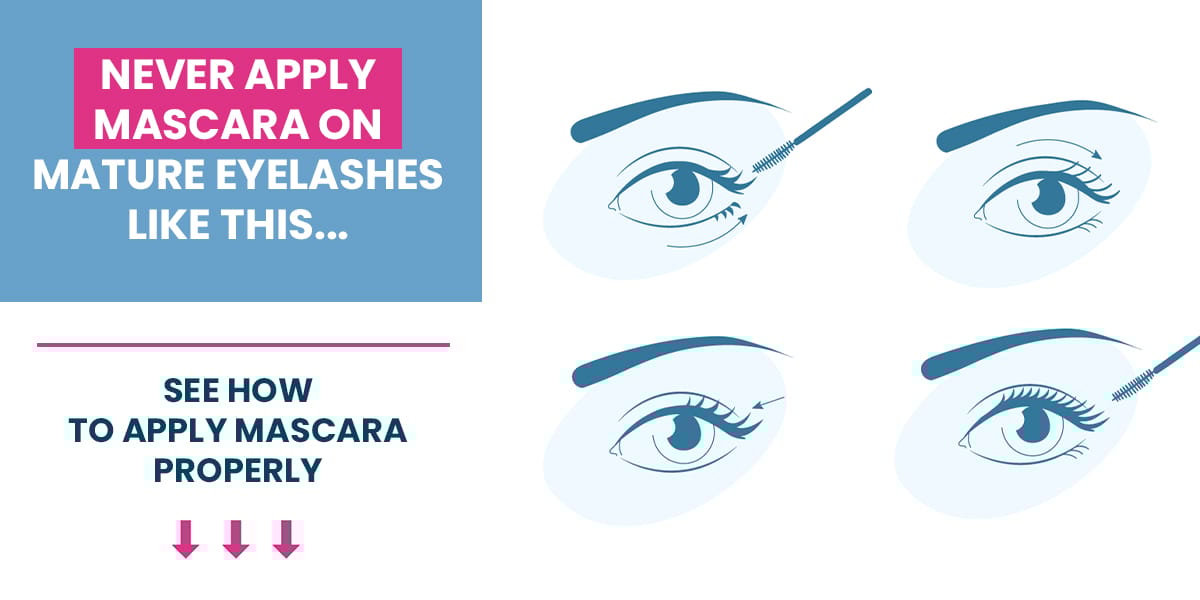
If mascara clumps, smudges, or makes you rub your eyes, it’s not you (or your age)… it’s the formula.
This guide explains what mature lashes need: a separating wand, water-resistant (not waterproof) wear, hypoallergenic comfort, and easier removal.
Learn quick fixes and smarter swaps in this full guide.
The L-Plate Retiree community is just beginning, and we’re figuring this out together–no pretense, no judgment, just honest conversation about navigating this next chapter.
Subscribe now, or share it with a friend, to get weekly insights, practical tips, and the occasional laugh to help you prepare for or thrive in retirement. Unlike other newsletters that assume you already know everything, we keep it simple and human.
And if today’s lifestyle musings brightened your day, you can toss a coffee into our Ko-fi tip jar ☕. Think of it like leaving a tip for your favourite busker – only this busker writes about retirement.
Because retirement doesn’t come with a manual… but now it does come with this newsletter.
The L-Plate Retiree Team
(Disclaimer: While we love a good laugh, the information in this newsletter is for general informational and entertainment purposes only, and does not constitute financial, health, or any other professional advice. Always consult with a qualified professional before making any decisions about your retirement, finances, or health.)
Reply