- L-Plate Retiree
- Posts
- Four Physiotherapist-Approved Exercises for Stronger, Pain-Free Knees
Four Physiotherapist-Approved Exercises for Stronger, Pain-Free Knees
A Singapore General Hospital physiotherapist shares four daily exercises to strengthen your knees, ease pain and protect one of the body's most complex joints.
Sponsored by


because retirement doesn’t come with a manual
I wonder how common is knee issues. My knees get sore sporadically as well, so hope today’s article will be helpful.
CS

The ceasefire is real. Oil collapsed 16%. The Dow had its best day since April 2025.
The quick scan: At 6:32 pm Tuesday night – with less than ninety minutes to spare before his own deadline – Trump posted on Truth Social: "I agree to suspend the bombing and attack of Iran for a period of two weeks." Iran agreed to reopen the Strait of Hormuz. Pakistan brokered the deal. Wednesday's session opened with futures up 3% and never looked back. Oil had its biggest single-day drop in six years. Rate cut odds jumped from 14% to 43%. Markets priced the end of the war premium in a single afternoon.
S&P 500: +2.41% to 6,782.81 – erasing weeks of war-driven losses in one session; the index reclaimed its 200-day moving average for the first time since the war began
Dow Jones: +2.85% to 47,909.92 – a gain of 1,325 points, its largest single-day advance since April 2025; Delta surged 12% on earnings and the oil collapse
NASDAQ: +2.80% to 22,634.99 – tech led the recovery; Nvidia, Tesla, AMD and Micron surged between 4% and 10% as the AI trade re-engaged.
What's driving it: The ceasefire announcement did three things at once. It collapsed oil – WTI fell 16.4% to $94.41, its steepest single-day drop since 2020 – removing the central inflation threat that had kept the Fed on hold. It revived rate cut expectations, with December odds jumping from 14% to 43% on CME FedWatch. And it unwound the geopolitical risk premium that had been embedded in equities since late February. The 10-year Treasury yield fell sharply to 4.27%. The VIX dropped to around 20, near its long-run average. JPMorgan's trading desk said the S&P 500 could climb further "as euphoria returns to markets." Ed Yardeni, who called the bottom last week, cut his US recession probability from 35% back to 20%.
Bottom line: This is the session the market has been waiting for since February 28. Two caveats worth holding onto: the ceasefire lasts two weeks, expires around April 22, and is contingent on the Strait staying open. Vice President Vance called it a "fragile truce." Iran's parliament speaker claimed the US had already violated it within hours. The deal is real but the war isn't over. For L-Plate Retirees, Wednesday is a useful reminder that the biggest single-day gains tend to arrive without warning – which is exactly why staying invested through the volatility, rather than waiting for clarity, is how long-term portfolios survive these episodes.
Trade any market, anywhere, any time.

News doesn’t take weekends off, neither should your portfolio. What about when the S&P moves 3% during your commute?
Liquid allows anyone to trade stocks, commodities, FX, pre-IPO companies, crypto, and more with up to 100X leverage, 24/7, from your phone or computer.
Any Market - Trade everything from Gold to Bitcoin, OpenAI to Nvidia, SK Hynix to JPY.
Anywhere - Liquid is available on iOS, Android, and desktop platforms, letting you trade from the subway, your office, and maybe even the bathroom.
Any Time - Liquid markets are open 24/7; so when an unprecedented event happens on Saturday, you can stay on top of your portfolio.
Active traders qualify for rewards each month!

Your Knees Are Working Harder Than They Should. Here's How to Help Them
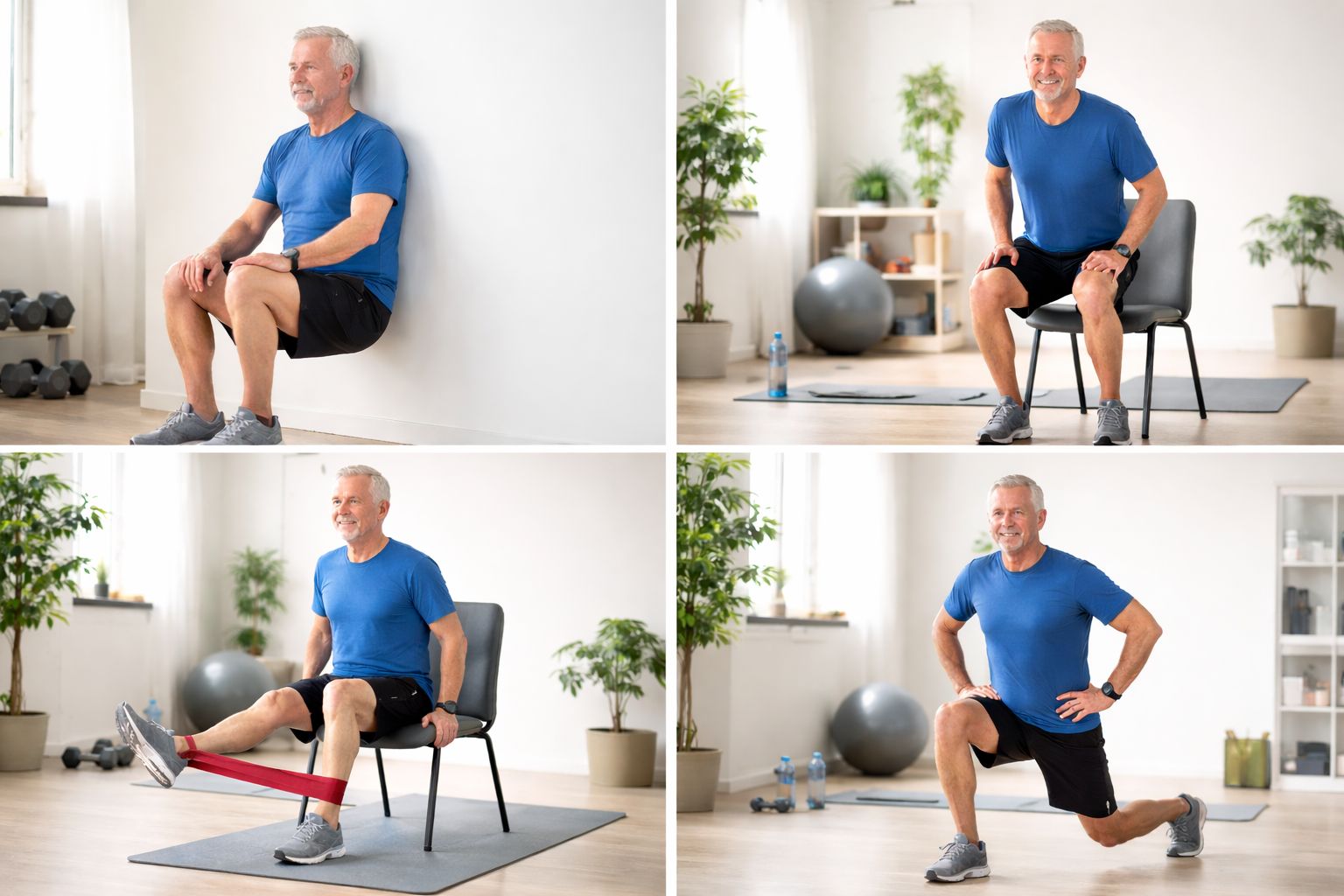
four exercises for stronger knees
The scoop: Sumiko Tan writes a column for the Straits Times called Sumiko at 62. This week she opened with her husband's knees.
At 20, doing national service with the commandos, he snapped his ACL jumping off the Ramp – the final station of the Standard Obstacle Course. In his 30s, he had ACL reconstruction surgery. It gave him two more decades of functional use. Now, in his 60s, osteoarthritis has set in. He can play tennis but can't run or walk for long. Every evening, he wraps a large ice bag over his right knee for an hour.
As many in their 60s discover, the injuries of youth have a way of returning.
This week's Physio Fix column draws on two senior clinicians – Dr Moo Ing How, orthopaedic consultant at Changi General Hospital, and Dr Philip Cheong, Senior Principal Physiotherapist at the Singapore General Hospital – to explain why knees give out, where the pain comes from, and what to do about it.
Why the knee is so vulnerable.
The knee is designed to act primarily as a hinge: flexing, extending, bearing enormous loads. Rotational force is where injury tends to find it.
But here's what Dr Moo wants people to understand: the knee doesn't function in isolation. It sits between two highly mobile joints – the hip above and the ankle below – and both affect it directly.
Tight or weak hips force the knee to absorb rotational forces it wasn't designed to manage. Sometimes what feels like knee pain is actually referred pain from the hip. Limited ankle mobility or foot problems like flat feet alter gait and change how force is distributed through the leg, eventually showing up as knee pain. The joint that hurts is not always where the problem begins.
Reading where your pain is.
Pain at the front of the knee typically points to kneecap-related issues – a dull ache that worsens with stair climbing, squatting or prolonged sitting. Inner-side pain usually involves the medial ligament or meniscus: sharp, localised, triggered by twisting or sudden directional changes. Outer-side pain, particularly sharp or burning pain when running or walking downhill, is often the iliotibial band. Pain behind the knee – a tightness or fullness when bending or straightening – suggests cysts, muscle or tendon issues. A deep ache that feels inside the joint, worsening after activity or prolonged weight-bearing, often indicates cartilage changes or inflammation.
"Knee pain is often influenced by how the entire lower limb – hips, knees, ankles and feet – functions and overall physical activity levels, rather than a single structure in isolation," Dr Cheong notes.
When to see a doctor.
Dr Moo flags specific warning signs that require medical attention rather than self-managed exercise: persistent or worsening pain; sudden swelling with warmth or redness; fever, unexplained weight loss, or night pain that interrupts sleep; and a knee that feels unstable, locked, or unable to bear weight after an injury. The last of these could indicate a major ligament tear or fracture and should not be waited out.
For most knee pain, though, the intervention is exercise – specifically, strengthening the muscles that support the joint.
The four exercises.
Dr Cheong provides four daily exercises to build the quad, glute and hamstring strength that protects knees. All can be done at home; only the third requires a resistance band.
Wall slide. Stand with your back flat against the wall, feet shoulder-width apart, moved about 20–30cm forward. Slowly slide down by bending your knees to a quarter or third squat – that's 45 to 60 degrees – keeping knees in line with toes and not extending past them. Hold for five seconds, then slide back up. This is one repetition. Don't force a 90-degree squat. 10 repetitions, 3 sets, daily. Strengthens the quadriceps, engages glutes and hamstrings, improves knee stability and joint control.
Sit to stand. Sit at the edge of a sturdy, normal-height chair with feet flat on the floor, shoulder-width apart. Lean slightly forward at the hips, keeping your chest up, then press through your heels and stand slowly. Pause for one to two seconds at the top. Stick your bottom out slightly as you sit back down, slowly and with control. 10 repetitions, 3 sets, daily. Strengthens quads, glutes and hamstrings; improves knee and hip stability; reduces fall risk. A chair that is too low will overload the knees.
Knee extension with resistance band. Sit on a sturdy chair with the resistance band looped around your ankles. Slowly straighten one knee against the band's resistance until fully extended. Hold one to two seconds, then lower slowly. Complete 10 repetitions on one leg before switching. 10 repetitions per leg, 3 sets, daily. Strengthens the quadriceps and supports proper knee alignment. The final few repetitions should feel effortful but should not cause pain.
Lunge. Stand with feet hip-width apart. Step forward with one foot so both knees can comfortably bend to roughly 90 degrees as you lower your body. The front knee should not extend past your second toe; the back knee lowers vertically toward the floor. Push through your front heel to return to standing. Start with 5 repetitions per leg, 3 sets, daily. Strengthens quads, glutes and hamstrings; improves balance, hip and knee stability.
For all four exercises: move slowly and with control. Stop if you feel sharp or pinching pain. Only bend to a pain-free range.
The honest caveat.
Physiotherapy can help most people improve symptoms and function, but not all pain can be fully eliminated – particularly in advanced conditions like osteoarthritis. "The focus is often on helping you move better, stay active and manage symptoms effectively," Dr Cheong says.
Sumiko's husband knows this well. He continues with his ice ritual, his physiotherapy, his adapted tennis – managing, not cured, and doing so over decades. For many approaching their 60s and 70s with complicated knee histories, that's the most realistic frame: not restoration, but maintenance.
Actionable takeaways for L-Plate Retirees:
Start the four exercises this week, not when the pain gets worse. The time to strengthen the muscles around the knee is before the joint deteriorates further, not after.
Map where your pain is before deciding what to do about it. Dr Cheong's location guide – front, inner, outer, back, deep – points to different causes requiring different approaches. Knowing which pattern you have helps you avoid self-treating the wrong thing.
Pay attention to your hips and ankles, not just your knees. If you have chronic knee pain, tight or weak hips and limited ankle mobility are common contributors. Hip strengthening and ankle mobility work may reduce knee symptoms even when the knee itself is the site of pain.
Don't skip the lunge because it feels hard. Start with five repetitions per leg and build from there. The lunge is the most demanding of the four exercises precisely because it most closely mimics the movements – stairs, getting off the floor – that cause problems when the knee is weak.
Know the warning signs that require a doctor. Sudden swelling with warmth, redness, fever, night pain that disrupts sleep, or a knee that feels locked, unstable or can't bear weight after an injury are all reasons to seek medical attention rather than self-manage with exercise.
Your Turn:
If you mapped your knee pain against Dr Cheong's location guide, which pattern does it most closely match – and does that match what you've been told, or what you've assumed, about your knee?
The four exercises target the same muscle groups – quads, glutes, hamstrings – that appear throughout our fitness coverage. How consistently are you working those muscles, and does today's specific knee framing change how you think about that?
Sumiko's husband has lived with a complicated knee for 40 years. At what point does managing a chronic condition start to feel like a meaningful life in itself – and at what point does it become a reason to seek a more permanent solution?
👉 Hit reply and share your story – your insights could inspire fellow readers in future issues.
If today's issue made you want to get off the chair and do something about it, consider supporting L-Plate Retiree on Ko-fi.
The 15-Minute Retirement Plan

Retirement savings face two quiet threats: cash flow gaps and inflation eroding purchasing power over time. The 15-Minute Retirement Plan helps investors with $1,000,000 or more account for both and build a portfolio designed to last the distance.
If these insights resonate with you, you’re in the right place. The L-Plate Retiree community is just beginning, and we’re figuring this out together – no pretense, no judgment, just honest conversation about navigating this next chapter.
Subscribe now to receive daily insights, practical tips, and the occasional laugh to help you thrive in retirement. We speak human here – no jargon without explanation, no assuming you’ve been investing since kindergarten.
And if today’s investing note hit the spot, you can buy us a coffee on Ko-fi ☕. Consider it your safest trade of the week – low risk, high return (in good vibes).
Because retirement doesn’t come with a manual… but now it does come with this newsletter.
The L-Plate Retiree Team
(Disclaimer: While we love a good laugh, the information in this newsletter is for general informational and entertainment purposes only, and does not constitute financial, health, or any other professional advice. Always consult with a qualified professional before making any decisions about your retirement, finances, or health.)
Reply