- L-Plate Retiree
- Posts
- HIIT May Be the Best Exercise for Older Adults to Lose Fat While Keeping Muscle
HIIT May Be the Best Exercise for Older Adults to Lose Fat While Keeping Muscle
Australian study of 120+ older adults finds high-intensity interval training reduces body fat without sacrificing muscle mass – unlike moderate and low-intensity exercise
In partnership with


because retirement doesn’t come with a manual
HIIT is supposed to be one of the best “value for time” exercise regimes. I recall the late Michael Mosley did a simple scientific experiment that showed that even just 4 minutes a day of all out cycling (high intensity) on an indoor stationery bicycle make a significant difference over time!
CS

Market Mood
Tech carnage deepens as AMD disappoints, software sector bleeds – but Dow stays resilient
The quick scan: US stocks fell on Wednesday as the sell-off in technology stocks intensified, with losses in Advanced Micro Devices hindering the trade. The tech rout accelerated despite positive economic data, as AI disruption fears and weak chip guidance triggered a rotation from growth into defensive names.
S&P 500: -0.51% to 6,882.72 – Notched back-to-back losses as chip and software weakness pulled the index down, though most individual stocks within the index actually rose, showing strength beneath the surface
Dow Jones: +0.53% to 49,501.30 – Added 260.31 points and bucked the broader sell-off, led higher by Amgen (+3.67%), Merck (+3.23%), and Nike (+3.09%) while IBM (-4.58%) and Salesforce (-4.52%) dragged
NASDAQ: -1.51% to 22,904.58 – Shares of AMD weighed on the broader market, pulling back 17% after its first-quarter forecast underwhelmed some analysts, triggering semiconductor carnage with Broadcom down 7%, Micron down 11%, and Lam Research down 10%.
What's driving it: The decline was driven by semiconductors after AMD plunged nearly 17% on a disappointing outlook, sparking heavy losses across the chip complex, while software stocks extended recent declines as investors reassessed competitive risks following new AI product releases. Despite the tech bloodbath, positive news emerged: Eli Lilly posted fourth-quarter earnings and revenue and 2026 guidance that blew past estimates, with the pharmaceutical giant anticipating 2026 revenue between $80 billion and $83 billion. The ADP report showed private companies added only 22,000 jobs in January (below 45,000 expected), while bitcoin fell 3% after breaking below $73,000.
Bottom line: Wednesday's divergence – Dow up, tech demolished – perfectly illustrates why sector diversification matters for retirees. If you're 100% in tech-heavy index funds, you suffered through a brutal -1.5% day. But if you own healthcare, consumer staples, and industrials, you might have actually gained. AMD's 17% plunge despite beating earnings shows that "good enough" isn't good enough when expectations run wild – a reminder that chasing hot sectors at peak valuations carries real risk. The labor market slowdown (22K jobs vs. 45K expected) might eventually help rate-sensitive stocks, but for now, the market cares more about AI fears than economic data.
The Drink Everyone’s Reaching For This Spring 🍸✨

Spring doesn’t have to mean a packed schedule and another drink you regret tomorrow.
This season, I’m reaching for something different: Vesper by Pique.
Pique is known for blending ancient botanicals with modern science to create elevated wellness essentials. Vesper might be my favorite yet. It’s a non-alcoholic, adaptogenic aperitif that delivers the relaxed, social glow of a cocktail. Without alcohol or the next-day fog.
It’s what I pour when I want something special in my glass on a bright spring evening. Each sip feels celebratory and uplifting. Relaxed body. Clear mind. No haze. No sleep disruption.
Crafted with L-theanine, lemon balm, gentian root, damiana, and elderflower, Vesper is sparkling, tart, and beautifully herbaceous.
If you’re ready for a new kind of happy hour, try Vesper here. 🌿✨

The Exercise That Lets You Lose Fat Without Losing Muscle
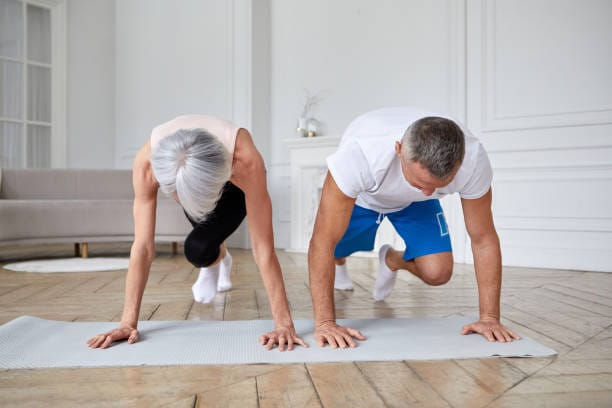
mountain climber is one of the common hiit exercises
The scoop: As people age, there's a natural increase in fat mass and a gradual decline in lean mass. This shift can increase the risk of certain health conditions like cardiometabolic diseases, osteoporosis, and sarcopenia.
Healthcare professionals routinely recommend that older adults engage in regular physical activity to promote health and prevent changes in body composition. But here's the question that matters: which exercises are best for improving body composition among older adults?
Most research has focused on younger populations, leaving that question largely unanswered. Until now.
New research from Australia's University of the Sunshine Coast goes some way toward filling that gap. A study published in the journal Maturitas suggests that high-intensity interval training (HIIT) may be the optimal exercise for helping older adults reduce body fat while preserving muscle mass.
The observational study involved more than 120 healthy older adults from the Greater Brisbane region, with an average age of 72 and an average body mass index of 26 kg/m² (categorized as normal for people aged over 65). Participants were assigned to different exercise intensity groups and engaged in structured, supervised exercise programs three times a week for six months.
The three exercise intensity groups included HIIT (short bursts of very vigorous activity alternated with recovery periods), moderate-intensity training (continuous exercise at a steady, moderate effort), and low-intensity training (gentler sessions designed for ease and sustainability).
Here's what they found: participants from all three groups experienced modest reductions in body fat. However, only the HIIT group maintained their lean muscle mass over the six months. By contrast, the moderate group showed slight muscle declines, and the effect in the low-intensity group was less clear.
"We found that high, medium and low intensity exercises all led to modest fat loss but only HIIT retained lean muscle," said study lead author Dr. Grace Rose in a press release.
HIIT is an effective training protocol that alternates short bursts of vigorous activity, performed at 100% effort, with brief, low-intensity recovery periods. The framework is designed for efficiency and forces the body to work anaerobically – when the body breaks down glucose for energy without using oxygen.
The researchers suggest that HIIT supports body composition by placing greater stress on muscles, encouraging the body to retain muscle mass.
"High intensity training in this study involved repeated short bursts, or intervals, of very hard exercise – where breathing is heavy and conversation is difficult – alternated with easier recovery periods," said study co-author Dr. Mia Schaumberg. "HIIT likely works better because it puts more stress on the muscles, giving the body a stronger signal to keep muscle tissue rather than lose it."
The findings add to the growing evidence that exercise intensity plays a key role in longevity and may have more of an impact than the quantity of physical activity.
While all exercise is beneficial, this study indicates that incorporating high-intensity intervals into fitness routines might offer older adults a way to combat fat mass gain without sacrificing muscle.
However, while HIIT may offer health benefits, it may not be suitable for everyone. The study generally involved healthy older adults, so results may differ for those with certain health conditions or mobility limitations. Anyone considering a new or more intense exercise regimen should consult a healthcare professional or qualified trainer to help tailor exercise plans to their abilities and health status.
For L-Plate retirees, this research challenges a common assumption: that older bodies need gentler exercise. The reality appears more nuanced. While low and moderate-intensity exercise certainly has value and beats being sedentary, if your goal is to maintain muscle mass while losing fat, intensity matters more than we thought.
This doesn't mean you need to suddenly start sprinting like you're 25. HIIT can be scaled to your current fitness level – the key is the effort relative to your maximum capacity, not the absolute speed or resistance. What matters is that breathing becomes heavy and conversation becomes difficult during those short bursts.
The study's design – three supervised sessions per week for six months – also suggests consistency matters. You can't HIIT your way to better body composition with one heroic effort. You need to show up regularly, push hard in short bursts, recover, and repeat.
And here's what's particularly encouraging: the average participant was 72 years old. If HIIT works for them, it can likely work for you, assuming you don't have contraindications. The "I'm too old for that" excuse just got a lot weaker.
The practical implication is clear. If you're currently doing only steady-state cardio – long walks, gentle bike rides, comfortable swimming – you might be missing out on the muscle-preserving benefits of occasional intensity. You don't need to abandon your current routine, but adding even one or two HIIT sessions per week could make a meaningful difference to your body composition.
Of course, there's still value in moderate and low-intensity exercise. They're more sustainable for some people, carry lower injury risk, and provide cardiovascular and mental health benefits. But if you're watching your muscle mass decline despite regular exercise, the answer might be to work harder, not longer.
The key word is "interval." You're not sustaining high intensity for 30 minutes. You're doing short bursts – maybe 30 seconds to 2 minutes – followed by recovery periods. This makes HIIT more accessible than many people assume, especially when supervised and properly programmed.
More research is necessary to understand how different exercise types affect long-term health outcomes in diverse aging populations. But for now, the message is encouraging: older bodies can handle – and benefit from – intensity.
Actionable Takeaways for L-Plate Retirees:
Understand that HIIT preserved muscle while moderate exercise didn't: All three intensity levels (high, moderate, low) produced modest fat loss in the six-month study, but only HIIT maintained lean muscle mass – moderate-intensity showed slight muscle declines, suggesting intensity matters more than duration.
Recognize that HIIT is scalable to your current fitness level: The study involved adults averaging 72 years old, proving you don't need to be young or exceptionally fit – HIIT intensity is relative to your maximum capacity, not an absolute measure.
Consider adding 1-2 HIIT sessions per week to your routine: You don't need to abandon moderate-intensity exercise entirely, but incorporating occasional high-intensity intervals (where breathing is heavy and conversation is difficult) could preserve muscle mass better than steady-state cardio alone.
Consult a healthcare professional before starting HIIT: The study involved healthy older adults with supervised programs, so those with health conditions, mobility limitations, or who haven't exercised recently should get medical clearance and potentially work with a qualified trainer.
Focus on effort, not absolute performance: HIIT works through short bursts (30 seconds to 2 minutes) of maximum effort for you, followed by recovery periods – it's the relative intensity that matters, not how fast you run or how much weight you lift compared to others.
Recognize that consistency beats occasional heroics: The study's structure (three supervised sessions per week for six months) demonstrates that regular, sustained practice produces results – one intense workout won't transform your body composition, but showing up consistently will.
Your Turn:
Are you currently doing only moderate-intensity exercise like walking or gentle swimming, potentially missing out on the muscle-preserving benefits of occasional intensity?
If someone told you last year that 72-year-olds were successfully doing high-intensity interval training in supervised studies, would you have believed them, or does this challenge your assumptions about what older bodies can handle?
What's stopping you from trying one HIIT session with professional supervision – genuine health concerns that need medical clearance, or just the assumption that you're "too old for that"?
👉 Hit reply and share your story – your insights could inspire fellow readers in future issues.
If this newsletter convinced you that intensity might be exactly what your aging muscles need – and gave you permission to work harder, not just longer – consider supporting L-Plate Retiree on Ko-fi. Your support helps me bring you science-backed fitness guidance that challenges assumptions.
What 100K+ Engineers Read to Stay Ahead

Your GitHub stars won't save you if you're behind on tech trends.
That's why over 100K engineers read The Code to spot what's coming next.
Get curated tech news, tools, and insights twice a week
Learn about emerging trends you can leverage at work in just 10 mins
Become the engineer who always knows what's next
If these insights resonate with you, you’re in the right place. The L-Plate Retiree community is just beginning, and we’re figuring this out together – no pretense, no judgment, just honest conversation about navigating this next chapter.
Subscribe now to receive daily insights, practical tips, and the occasional laugh to help you thrive in retirement. We speak human here – no jargon without explanation, no assuming you’ve been investing since kindergarten.
And if today’s investing note hit the spot, you can buy us a coffee on Ko-fi ☕. Consider it your safest trade of the week – low risk, high return (in good vibes).
Because retirement doesn’t come with a manual… but now it does come with this newsletter.
The L-Plate Retiree Team
(Disclaimer: While we love a good laugh, the information in this newsletter is for general informational and entertainment purposes only, and does not constitute financial, health, or any other professional advice. Always consult with a qualified professional before making any decisions about your retirement, finances, or health.)
Reply