- L-Plate Retiree
- Posts
- Insomnia Isn't Just a Symptom: How Science Changed Everything We Knew
Insomnia Isn't Just a Symptom: How Science Changed Everything We Knew
For decades, insomnia was dismissed as a side effect of something else. New science shows it's a disorder in its own right – and pills aren't the fix.
Sponsored by


because retirement doesn’t come with a manual

OpenAI missed its own revenue targets. The UAE quit OPEC+. Oil rose. The Mag Seven earnings begin tomorrow.
The quick scan: Tuesday's pullback was driven by two stories that landed late in the session. A Wall Street Journal report revealed OpenAI missed its own revenue and user growth targets in recent months, with CFO Sarah Friar reportedly telling leadership she was concerned the company may struggle to meet its computing contracts if top-line growth doesn't accelerate. That rattled AI-adjacent stocks broadly. Separately, the UAE announced it will leave OPEC+ effective May 1 – a significant shift that added uncertainty to oil prices. Trump's national security team was also reported to be sceptical of Iran's latest Hormuz proposal. The day's saving grace was a solid earnings session outside technology: Coca-Cola, General Motors and Nucor all beat expectations.
S&P 500: –0.49% to 7,138.80 – a modest pullback from Monday's record; the index remains well above 7,100 with the Magnificent Seven reporting over the next two days
Dow Jones: –0.05% to 49,141.93 – essentially flat; Coca-Cola's nearly 4% gain and GM's beat offset Oracle's 5.2% fall and Illinois Tool Works' 9% drop on geopolitical pressure
NASDAQ: –0.90% to 24,663.80 – the sharpest fall of the three; Oracle fell as the OpenAI report cast doubt on AI infrastructure spending; the Russell 2000 fell 1.26%, with 54% of all US issues declining.
What's driving it: The OpenAI revenue miss is the most significant single data point of the week so far. The bear case on AI – that the infrastructure spending cycle outpaces actual monetisation – has been dismissed throughout this rally. A report suggesting OpenAI itself is struggling to grow revenue fast enough to meet its own compute commitments gives that bear case something concrete. Oracle, Nvidia's supply chain, and AI-adjacent software names all took pressure. The UAE's OPEC+ exit adds a new variable to oil markets at exactly the wrong time, with Iran's Hormuz situation still unresolved. The 10-year yield rose to 4.36%. Wednesday is the session the whole week has been building toward: Microsoft, Alphabet, Amazon and Meta all report after the bell, alongside the Fed's rate decision.
Bottom line: One negative data point on OpenAI's revenue doesn't invalidate the AI thesis – but it introduces a question that wasn't there yesterday. Wednesday's Magnificent Four earnings are the market's most direct answer. Yesterday's article on the CAPE ratio is the right frame: elevated valuations require earnings to keep justifying them, and tomorrow we find out if they do.
Copy BlackRock's $10 Trillion Playbook

BlackRock manages $10 trillion using a playbook that's been hidden from retail investors for decades.
Until now.
I reverse-engineered their three-phase system into the ABN Framework:
A - All-Weather Portfolio (protect your base in any market)
B - Become Your Own Bank (collect fees like institutions)
N - Native Markets (get in before major exchange listings)
The same institutional edge... without needing millions in capital.
Over 4,000 investors are already using this:
Bill generated $932,000 in 21 days using our Native Markets strategy.
David made $27,000 in passive returns in just 2 weeks.
Jeff 5x'd his entire portfolio with our ABN framework.
The window's closing as institutional money floods in, so act quick.
For educational purposes only. Results will vary. DM Intelligence LLC is not liable for losses.

Why Your Doctor's Old Advice About Insomnia Was Probably Wrong
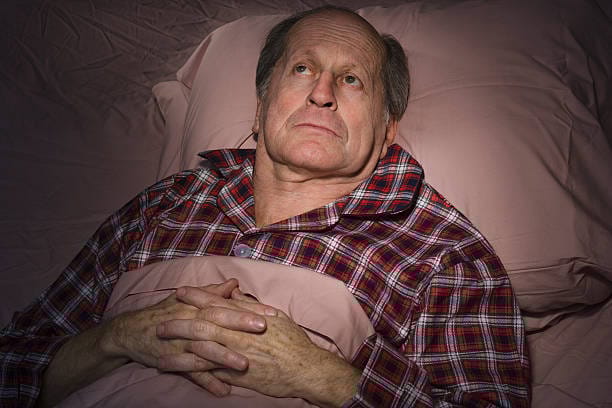
tossing and turning in bed?
The scoop: Insomnia has been tormenting people for as long as people have existed. What has changed is how science understands it.
Over the past 20 years, researchers have fundamentally revised their view of chronic sleeplessness. The new understanding represents one of the quieter revolutions in modern medicine – quiet, perhaps, because so many people have accepted insomnia as part of life without knowing there's a more effective treatment available. About one third of adults report frequent insomnia symptoms. Most never seek help.
The old model: insomnia as a symptom.
For much of medical history, insomnia that occurred alongside another condition was classified as "secondary insomnia." The logic was simple and seemingly sensible: you have depression, your depression causes poor sleep. You have chronic pain, your pain keeps you awake. Treat the underlying condition and the sleep will follow.
This framing had a significant clinical consequence: insomnia rarely received treatment in its own right. But the model turned out to be wrong.
The shift: insomnia as a disorder of its own.
In the early 2000s, research and clinical practice evidence began to tell a different story. Insomnia, it turned out, could precede an underlying condition – arriving before the depression or the anxiety, not after it. More significantly, it could long survive a primary condition even after that condition had been treated. People who recovered from depression often found their insomnia persisted for months or years. People whose chronic pain was managed still lay awake at night.
This was the conceptual breakthrough. Insomnia wasn't just a symptom pointing toward something else. For many people, it had become a disorder in its own right – self-perpetuating, independent, and deserving of targeted treatment.
The formal diagnosis shifted: "secondary insomnia" became "insomnia disorder."
The mechanism: what actually keeps you awake.
Understanding why the new model works requires understanding the mechanism that makes insomnia self-perpetuating once it takes hold.
The key concept is hyperarousal – the brain's wake networks remain activated even when the body is exhausted. A second, more insidious mechanism is conditioned wakefulness. When you lie in bed unable to sleep – night after night, week after week – your brain is learning something. It's learning that bed is associated with wakefulness, not sleep. The bed that should be a cue for sleep becomes a cue for arousal. The more time you spend lying awake in it, the stronger that conditioned association becomes.
This is why the most instinctive response to insomnia – trying harder to sleep, lying in bed longer, going to bed earlier to give yourself more chances – often makes things worse rather than better. You're reinforcing the very association you need to break.
What the evidence says actually works.
CBT-I – Cognitive Behavioural Therapy for Insomnia – is the first-line recommended treatment. It produces results comparable to sleeping medication but with no side effects, fewer relapses, and improvements that continue after treatment ends. Sleeping pills mask symptoms. CBT-I changes the underlying condition.
The core involves two techniques. Sleep restriction – deliberately limiting time in bed to build genuine sleep pressure and re-establish the bed-sleep association. And stimulus control – ensuring bed is used only for sleep, breaking the conditioned wakefulness cycle. Both feel counterintuitive. Being told to spend less time in bed when exhausted is uncomfortable. But you are rebuilding a conditioned response, and that requires temporarily strengthening the contrast.
The practical guidance for immediate use.
The article offers practical steps grounded in the same principles as CBT-I, which are useful even for people not in formal treatment.
If you cannot sleep, get out of bed. Do something absorbing but calm – read, write a list for tomorrow, listen to music, do breathing exercises. Return to bed only when you feel genuinely sleepy.
If you're tired the next day, a short afternoon nap is fine – maximum 20 minutes. But use it sparingly. Daytime sleep reduces the sleep pressure that makes night-time sleep easier, and too much of it can deepen the cycle rather than break it.
The gender dimension.
The research notes that women are disproportionately affected by chronic insomnia – and the reasons are structural, not constitutional. Hormone fluctuations, pregnancy and childbirth, breastfeeding, menopause, higher rates of depression and anxiety, caregiving roles – all create more opportunities for prolonged sleep disruption over a lifetime.
Menopause deserves particular mention. The hormonal changes of the menopause transition directly disrupt sleep architecture and increase the risk of developing insomnia disorder. The good news, from multiple randomised controlled trials, is that CBT-I is as effective for menopausal insomnia as it is for other forms – and outperforms hormone therapy, antidepressants, yoga, and exercise as a specific insomnia treatment.
The treatment gap.
Despite all of this, only a small proportion of people with insomnia seek help – people assume symptoms are trivial, don't know CBT-I exists, or reach for sleeping pills. For those who want to try CBT-I without a formal referral, online platforms such as Sleepful offer free self-guided programmes.
The shift from "secondary insomnia" to "insomnia disorder" meant millions told their sleeplessness was someone else's problem were finally told it was worth treating directly.
That's the quiet revolution.
Actionable takeaways for L-Plate Retirees:
If you have another condition and poor sleep, don't assume one causes the other. The old model was wrong. Insomnia alongside depression, chronic pain, or anxiety is now understood as a co-occurring disorder needing its own treatment. Treating only one may leave the other running.
Stop lying in bed awake. The most common response to insomnia – spending more time in bed, going to bed earlier, lying there trying harder – strengthens the conditioned wakefulness that perpetuates the problem. If you've been awake for 20 minutes, get up. Do something calm. Return only when sleepy.
CBT-I is the first-line treatment, and it outperforms sleeping pills. No side effects, fewer relapses, benefits that continue after treatment ends. If you've been managing insomnia with medication or just enduring it, ask your GP about CBT-I or look for an online platform.
Sleep restriction feels wrong but works. Limiting time in bed to build genuine sleep pressure is uncomfortable short-term and effective medium-term. You are rebuilding a conditioned response.
Menopause and insomnia are directly connected. If you're a woman in or past the menopause transition and sleeping poorly, you're not imagining it and it's not simply ageing. The hormonal changes directly disrupt sleep architecture. CBT-I has been specifically tested in this population and outperforms other standard interventions.
The 20-minute nap rule. A short afternoon nap when sleep-deprived is fine and genuinely restorative. Beyond 20 minutes, you risk entering deeper sleep stages, which increases grogginess on waking and reduces the sleep pressure needed for the following night. Set an alarm.
Your Turn:
The article describes a diagnostic revolution – insomnia reclassified from a symptom to a disorder in its own right. Does that reframing change how you think about sleep problems you've experienced or observed in others?
The mechanism – lying awake in bed training your brain to associate bed with wakefulness – is remarkably intuitive once you understand it. Have you noticed this pattern in your own experience, and did you know that getting out of bed was the clinically recommended response?
CBT-I is the recommended first-line treatment, but most people with insomnia either don't know about it or reach for medication first. If you've tried sleeping pills, did they address the problem or just manage it – and would you approach it differently knowing what you know now?
👉 Hit reply and share your thoughts – your answers could inspire fellow readers in future issues.
If tonight's sleep is better for having read this, consider shouting L-Plate Retiree a coffee on Ko-fi.
Your body didn't forget how to make love

It just needs a powerful reminder. Rugiet Ready™ combines three proven medications—Sildenafil for blood flow, Tadalafil for staying power, and Apomorphine to prime your brain for arousal.
The result? An ED treatment that works in as little as 15 minutes, lasts up to 36 hours, and dissolves under your tongue so you're not waiting on a pill to digest.
No more second-guessing. No more "did I take it early enough." Just reliable performance when it counts.
Men who've tried everything else keep saying the same thing—this one's different.
The L-Plate Retiree community is just beginning, and we’re figuring this out together–no pretense, no judgment, just honest conversation about navigating this next chapter.
Subscribe now, or share it with a friend, to get weekly insights, practical tips, and the occasional laugh to help you prepare for or thrive in retirement. Unlike other newsletters that assume you already know everything, we keep it simple and human.
And if today’s lifestyle musings brightened your day, you can toss a coffee into our Ko-fi tip jar ☕. Think of it like leaving a tip for your favourite busker – only this busker writes about retirement.
Because retirement doesn’t come with a manual… but now it does come with this newsletter.
The L-Plate Retiree Team
(Disclaimer: While we love a good laugh, the information in this newsletter is for general informational and entertainment purposes only, and does not constitute financial, health, or any other professional advice. Always consult with a qualified professional before making any decisions about your retirement, finances, or health.)
Reply