- L-Plate Retiree
- Posts
- Practicing Retirement During Christmas Break: The Honest Reality After Week One
Practicing Retirement During Christmas Break: The Honest Reality After Week One
Sleep, Lego, missed exercise goals, and why unstructured time is harder than expected
In partnership with


because retirement doesn’t come with a manual

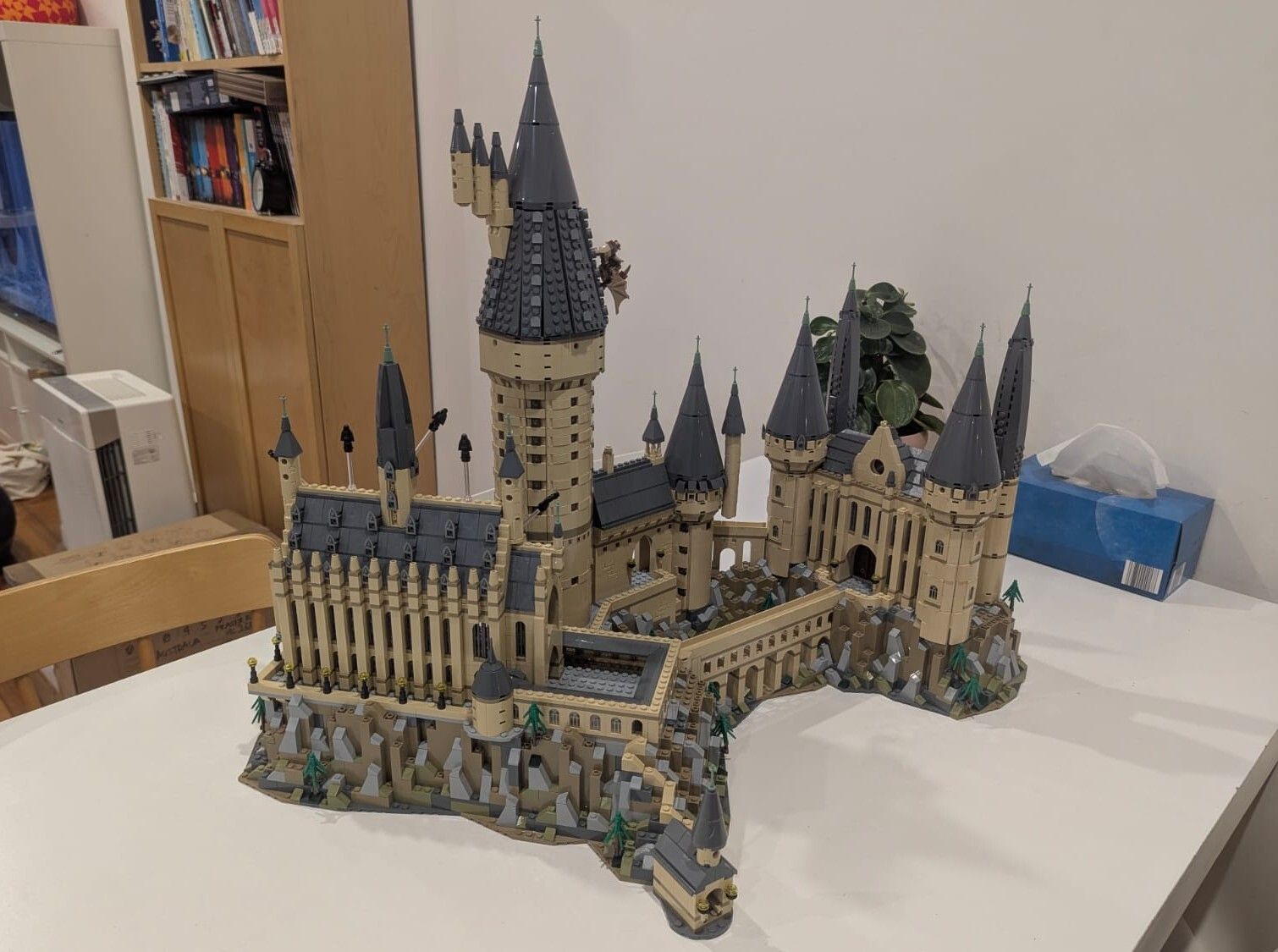
my “output” this week that I can show
Last Weekend Musings of 2025. And confession time.
I'm one week into my two-week "forced leave" – the annual Australian ritual where companies shut down over Christmas and New Year, presumably so we can all reflect on our life choices while stuck in traffic at shopping centres. No travel plans, so I thought: perfect opportunity to practice retirement. I'd fix up that Lego Hogwarts Castle I scored off Facebook Marketplace (nothing says "living the dream" like rebuilding a wizard school), restart my 5km running, explore the Outer Circle Trail by bike, finish those systems training modules. You know, live that ideal retirement we've been waxing lyrical about for six months – exercise, passion projects, purposeful days.
Should be straightforward when there's no work and no deadlines hanging over you, right?
Turns out those articles about retirement's lost structure weren't being melodramatic. They were being kind.
Maybe it's normal – after working hard (just this past year, in my case) – to feel we've earned the right to stop rationing our time like some kind of temporal miser. But here's the gap between aspirational LinkedIn post and embarrassing reality:
Achieved: Sleep catch-up (several glorious sleep-ins that may have crossed into "concerning" territory). Christmas beach picnic (abbreviated due to wind and unseasonable cold – note to self: "summer" in Australia is apparently a suggestion, not a guarantee). Family game night. Physical Asia episodes with N. Christmas shopping with the Wife. Hogworts rebuilt, sans the lights.
Not achieved: 5km running restart (the running shoes remain optimistically placed by the door, mocking me). Outer Circle Trail exploration (the bike also judges me silently). Training completion. Consistent dead hangs and bodyweight exercises.
Consequence: Weight's gone up, thanks to festive eating without my three-days-a-week bike commute balancing it out. Turns out "I'll cycle tomorrow" works great as a weight management strategy... until tomorrow never actually arrives.
The odd thing? Looking at this objectively, it seems I've done more than I've missed. Yet it doesn't feel productive. Perhaps because the mental checklist remains largely unticked, sitting there like a disappointed parent. Or maybe because sleeping until 11am, while delightful, doesn't quite register as an "achievement" in the traditional sense – though I'd argue it should.
One week down, one to go. Time to recalibrate. Or, you know, just accept that practice retirement has taught me retirement might require actual practice. Several years of practice. Daily practice. With coaches. And possibly medication.
Let's see if week two involves less napping and more doing. Or at least more interesting excuses.
Your Turn:
What do you think drives that feeling of "unproductive" even when you've objectively done more than you've missed – habit, expectation, or something deeper?
Is there value in occasionally doing nothing on your to-do list, or does that just create anxiety disguised as rest?
After working hard for years, do we actually deserve a break from structure – or do we need structure to feel like we're making good use of a break?
👉 Hit reply and share your thoughts – I’d love to hear what’s resonating with you.
Speaking of Practice Retirement and Missing the Mark...
My week-one confession about struggling with unstructured time reminds me why events like Invest360 matter. While I'm fumbling through two weeks of "freedom" (and discovering my retirement skills need serious work), here's something I can actually control: making sure the money side of retirement doesn't require practice runs.
Because here's what my practice week taught me – retirement isn't just about having time. It's about having the financial foundation that lets you use that time without constantly calculating whether you can afford to keep practicing.
Invest360 – January 10, 2026
One day. Every major asset class. Top investors from stocks, options, forex, crypto, and real estate revealing their actual 2025 results and their gameplans for 2026.
This isn't another single-strategy seminar. It's a complete 360° view of where the smartest money sees opportunities in the new market cycle – before the crowd catches on.
What You'll Get:
Exclusive portfolio reveals (actual trades, wins, losses from 2025)
Insider 2026 gameplans from top investors across all asset classes
A clear execution blueprint to position your portfolio early
Insights to identify which strategies actually fit your goals
Date: January 10, 2026
Time: 9:00AM – 5:00PM (SGT+8)
Location: Live on Zoom
Critical detail: No replays. Full insights revealed live only. Seats are extremely limited.
☕ If today’s musing served up a thought to chew on, you can shout me a coffee on Ko-fi. It keeps this cosy corner of wisdom well-fuelled.
Does your car insurance cover what really matters?

Not all car insurance is created equal. Minimum liability coverage may keep you legal on the road, but it often won’t be enough to cover the full cost of an accident. Without proper limits, you could be left paying thousands out of pocket. The right policy ensures you and your finances are protected. Check out Money’s car insurance tool to get the coverage you actually need.

Smart Savers – Minimizing Costs & Measuring Efficiency

the principle of savings - it all adds up!
Alright, L-Plate Retirees, we're on the home stretch of our deep dive into investment costs and tax efficiency! We've uncovered the fees and taxes that can nibble away at your returns. Now, let's get practical with Strategies for Minimizing Investment Costs and learn how to Measure Investment Efficiency. Think of this as becoming a super-savvy shopper in the investment supermarket, ensuring that your Personal Financial Assessment leads to the most effective investment choices and maximizes your net returns.
First, let's talk about Vehicle Selection Strategies. The simplest way to cut costs is to opt for Low-Cost Index Options like index mutual funds and ETFs. These passively track a market index, so they don't need expensive managers, and the fee competition is fierce, leading to ultra-low costs. This aligns with the Foundations of Investing principle of efficiency. For larger portfolios, you might even consider Direct Indexing. And don't be afraid of Fee Negotiation – you might be surprised what you can get, especially with larger investments or through group plans.
Next, focus on Trading Cost Reduction. Use Limit Orders instead of market orders to get the price you want, and if you're trading internationally, be mindful of Forex Management to avoid hefty conversion fees. The golden rule? Minimize Turnover. A buy-and-hold approach not only reduces trading costs but also helps with tax efficiency. This strategy directly supports the long-term investment perspective and helps manage risk from excessive trading.
Choosing the right Platform and Service is also crucial. Compare Brokerage commissions, account fees, and foreign market access costs. When using a Fund Platform, evaluate their fees, fund selection, and service quality. In developed markets, you'll find highly competitive direct-to-consumer platforms and even commission-free trading. Your choice here should be informed by your Personal Financial Assessment and your investment needs.
Finally, how do you know if you're getting good value? You need to Measure Investment Efficiency. Look at Cost-Adjusted Performance Metrics like After-Fee Returns and After-Tax Returns. These give you a much clearer picture of what you're actually earning. Use Risk-Adjusted Efficiency Metrics like the Sharpe Ratio to compare investments with different risk levels. And don't forget Cost Transparency Tools like the Total Cost of Ownership (TCO) to get a complete view of all costs involved.
By being a cost-conscious investor and using these efficiency measures, you can ensure that more of your money is working for you, not for the financial industry. It's about being smart, not just lucky!
L-Plate Takeaways
Go Passive for Low Costs: Index funds and ETFs are your best friends for minimizing management fees, aligning with efficient investing principles.
Trade Smart: Use limit orders, manage forex costs, and avoid excessive trading to cut down on transaction fees, supporting long-term strategies and managing risk.
Choose Your Platform Wisely: Compare brokers and fund platforms to find the most cost-effective option for your needs, based on your Personal Financial Assessment.
Measure What Matters: Look at after-fee and after-tax returns to understand your true performance, directly applying Risk and Return Fundamentals.
Be a Savvy Shopper: A little bit of research and a focus on costs can make a huge difference to your long-term investment success, a key takeaway from Foundations of Investing.
What do Carlyle, Blackstone, and KKR all have in common?

Leaders from Carlyle, Blackstone, and KKR are among the guest speakers in the Wharton Online + Wall Street Prep PE Certificate Program.
Over 8 weeks, you will:
Learn directly from Wharton faculty
Get hands-on training with insights from top firms
Earn a respected certificate upon successful completion
Save $300 with code SAVE300 at checkout + $200 with early enrollment by January 12.
Program starts February 9.
The L-Plate Retiree community is just beginning, and we’re figuring this out together – no pretense, no judgment, just honest conversation about navigating this next chapter.
Subscribe now, or share it with a friend, to get weekly insights, practical tips, and the occasional laugh to help you prepare for or thrive in retirement. Unlike other newsletters that assume you already know everything, we keep it simple and human.
And if today’s lifestyle musings brightened your day, you can toss a coffee into our Ko-fi tip jar ☕. Think of it like leaving a tip for your favourite busker – only this busker writes about retirement.
Because retirement doesn’t come with a manual… but now it does come with this newsletter.
The L-Plate Retiree Team
(Disclaimer: While we love a good laugh, the information in this newsletter is for general informational and entertainment purposes only, and does not constitute financial, health, or any other professional advice. Always consult with a qualified professional before making any decisions about your retirement, finances, or health.)
Reply