- L-Plate Retiree
- Posts
- When Your Bowels Develop Stage Fright
When Your Bowels Develop Stage Fright
Regular as clockwork for decades – until the Australian Government mailed me a sample collection kit and suddenly I forgot how to poop
In partnership with


because retirement doesn’t come with a manual

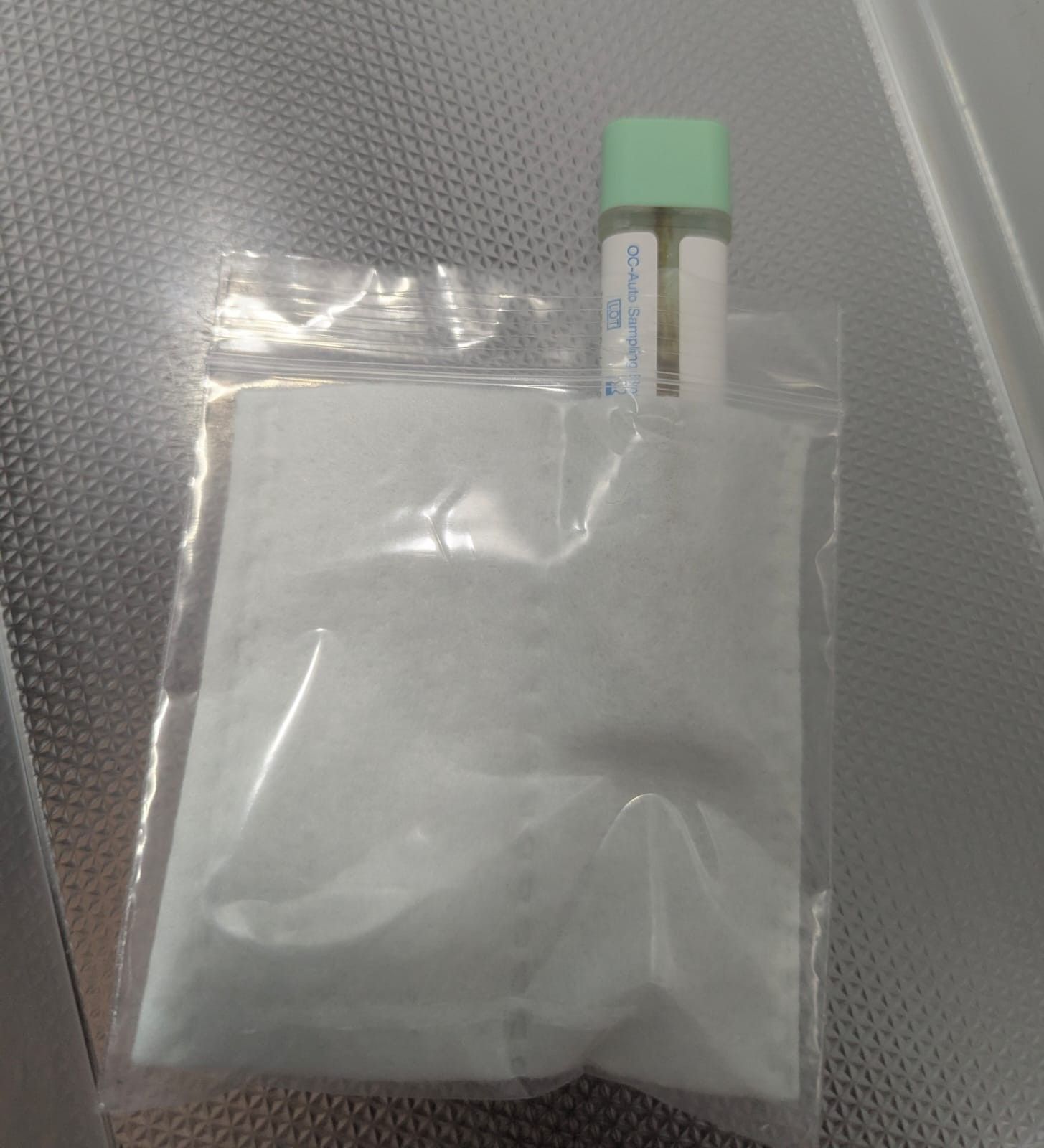
sample one waiting for its brother
The white envelope arrived from the Australian Government late last year, shortly after my birthday. Inside was a bowel cancer screening kit with instructions, sample collection apparatus, and return postage. I put it aside. Then put it aside again. And again.
Not because I didn't understand the importance. I'd had hemorrhoid surgery decades ago – an experience that permanently altered my relationship with digestive health. Since then, I've been religious about fiber intake. Yoghurt is a daily staple. Kimchi sits in my fridge like a permanent resident. My morning routine has been Swiss watch reliable ever since.
Which is why I kept delaying the test. It seemed so straightforward. Collect two samples. Keep them refrigerated. Mail them back. What could possibly go wrong?
Everything, as it turns out, once you add the pressure of intentional performance.
The timing requirements complicated matters immediately. The collected samples need to be kept cool – refrigerated – until both are ready to mail. This meant I had to time the collection to days when I was working from home, which narrowed the window considerably.
It also meant I needed refrigerator space my wife wouldn't object to. The family fridge was immediately vetoed with the kind of vehemence normally reserved for serious household violations. Fortunately, we have a spare fridge we've been planning to sell. Unfortunately, this meant my poop samples would be the spare fridge's final act of service before retirement. I hope the future buyer is not a subscriber…
D-Day arrived. Working from home. Sample collection kit ready. My digestive system, which had operated with clockwork precision for years, chose this particular morning to develop stage fright.
Attempt one happened around 1030 AM. The familiar signals. The unmistakable feeling. I prepared the collection materials, positioned everything correctly, and... nothing. My bowels apparently needed more time to consider their options.
Attempt two came after lunch. Same signals. Same preparation. Same result. It was like my digestive system was trolling me.
Attempt three, mercifully, worked. Sample one collected. Into the spare fridge it went. One down, one to go.
Day two. Ready to complete this simple task and move on with my life.
Complete radio silence from my digestive system. Not even a false alarm. Nothing. My body, which normally requires no conscious supervision for this particular function, had apparently decided that yesterday's performance exhausted its cooperative spirit for the week.
I sat there thinking about the absurdity of the situation. For years – literally years since the hemorrhoid surgery – I've maintained a diet specifically designed to ensure smooth, regular bowel movements. The yoghurt. The kimchi. The fiber. All of it working perfectly when I wasn't asking it to do anything special.
But now? Now that the Screening Program needs two samples for cancer screening? Now that there's a medical purpose and a spare fridge standing by and a carefully planned work-from-home schedule?
My bowels had developed performance anxiety.
It's the same phenomenon that makes falling asleep impossible the night before an important event, despite having zero trouble sleeping any other night. The same thing that makes your mind go blank during a presentation even though you know the material perfectly. The moment you become hyperaware of needing to do something well, you interfere with the automatic systems that do it better when you're not paying attention.
The spare fridge now contains exactly one sample, waiting for its brother. My wife walks past it with the kind of studied avoidance normally reserved for knowing there's something in the fridge you don't want to think about.
And I'm left contemplating the ridiculous reality that I've planned everything perfectly – the work-from-home days, the spare fridge, the dietary preparation – and still can't get my body to cooperate on a simple schedule.
Which, come to think of it, sounds a lot like retirement planning.
You can plan everything meticulously. Calculate your savings down to the last dollar. Schedule your bucket list activities. Optimize your investment portfolio. Prepare for every contingency you can imagine.
And then reality shows up and does whatever it wants, regardless of your careful planning.
Sometimes the things that worked automatically for years stop working the moment you need them to perform on schedule. Sometimes your body – or your investments, or your relationships, or your carefully laid plans – develops stage fright when you're actually paying attention.
The lesson, if there is one, isn't that planning is useless. The hemorrhoid surgery taught me that prevention matters. The fiber and yoghurt and kimchi have kept things running smoothly for years. That preparation is real and valuable.
But there's a difference between preparing well and expecting perfect control. Between having a plan and demanding that everything execute exactly on your timeline.
I still need to collect one more sample. Hopefully over this weekend – I cannot bring myself to to tell my Boss I need to work from home because I need to collect a second sample. The spare fridge stands ready. But I'm trying not to think about it quite so hard this time.
My bowels, apparently, work better when I trust the process that's been working all along instead of micromanaging it.
Maybe retirement works the same way. Prepare well. Then let go of the illusion that you can control the exact timing and execution of everything.
Some things happen on their own schedule, not yours.
Your Turn:
Have you ever planned something perfectly only to have your body (or life) refuse to cooperate on your timeline?
What's something that worked automatically for years until the moment you actually needed it to perform on schedule?
👉 Hit reply and share your thoughts – I’d love to hear what’s resonating with you.
☕ If this musing reminded you that even the most carefully laid plans can't control timing – whether it's your bowels or your retirement – consider buying L-Plate Retiree a coffee on Ko-fi. Your support keeps these reflections coming.
|

Stop overpaying to swap crypto.

The exchange you're using? Probably charging you more than you need to pay.
CoW Swap compares prices across every major exchange in real time. Gets you the best deal automatically. You just swap like normal.
No extra work. Better prices.

The Policy in Practice – Adaptation & Governance

nah, your IPS doesn’t have to be – should not be? – this long…
Your Investment Policy Statement (IPS) (last week’s lesson) is your investment constitution, but even a constitution needs to be applied and adapted. Today, we look at how to adapt your policy to different market environments and the importance of good Governance.
Adapting Your Policy:
Your IPS must be robust enough to handle different market conditions:
Developed Markets: In stable, liquid markets, your policy can focus on the long-term Strategic Asset Allocation (SAA).
Emerging Markets: Your policy needs to incorporate wider risk tolerances and explicitly address risks like political instability and currency fluctuations.
High-Inflation Environments: Your return objective must be stated in real (inflation-adjusted) terms, and your policy may favor inflation-hedging assets like real estate or commodities.
The key is that the policy itself remains stable, but the implementation adapts to the environment. For example, your target allocation might remain 60/40, but your rebalancing tolerance band might be wider in a volatile market to reduce transaction costs.
Governance: Who's in Charge?
For L-Plate Retirees, governance is simple: you are the Investment Committee. The IPS is the primary tool for communication and accountability between you and your financial advisor (if you have one).
Fiduciary Duty: If you use an advisor, ensure they operate under a fiduciary duty, meaning they must legally act in your best interest. Your IPS is the evidence that this duty is being met.
Compliance: Your IPS must comply with the regulatory environment. For example, if your country restricts certain types of foreign investment, your IPS must reflect those legal constraints.
The IPS is a Living Document:
The IPS is not a static document you file away. It is a living document that must be reviewed and reaffirmed (or revised) at least annually, or whenever there is a significant change in your life (e.g., a large inheritance, a major health event). This prevents policy drift, where your portfolio gradually moves away from its intended risk profile due to market movements or emotional decisions.
By having a clear, adaptable policy and a simple governance structure, you ensure that your investment decisions are always rational, disciplined, and aligned with your long-term goals.
L-Plate Takeaways:
Adapt, Don't Abandon: Your policy should be stable, but its implementation must adapt to the market environment (e.g., high inflation requires real return objectives).
You are the Governance: For individual investors, the IPS is the main tool for discipline and accountability.
Fiduciary Duty: If you use an advisor, ensure they are legally bound to act in your best interest.
Living Document: Review and revise your IPS annually or after major life changes to prevent policy drift.
Compliance is Key: Ensure your policy adheres to all local regulatory and tax constraints.
Your Simplest Win of the Day

Feeling better doesn’t have to be complicated. AG1 Next Gen is a clinically studied daily health drink that supports gut health, helps fill common nutrient gaps, and supports steady energy, all in one simple scoop. Start your mornings with AG1 and get 3 FREE Travel Packs plus Vitamin D3+K2 in your Welcome Kit.
The L-Plate Retiree community is just beginning, and we’re figuring this out together – no pretense, no judgment, just honest conversation about navigating this next chapter.
Subscribe now, or share it with a friend, to get weekly insights, practical tips, and the occasional laugh to help you prepare for or thrive in retirement. Unlike other newsletters that assume you already know everything, we keep it simple and human.
And if today’s musings brightened your day, you can toss a coffee into our Ko-fi tip jar ☕. Think of it like leaving a tip for your favourite busker – only this busker writes about retirement.
Because retirement doesn’t come with a manual… but now it does come with this newsletter.
The L-Plate Retiree Team
(Disclaimer: While we love a good laugh, the information in this newsletter is for general informational and entertainment purposes only, and does not constitute financial, health, or any other professional advice. Always consult with a qualified professional before making any decisions about your retirement, finances, or health.)
Reply