- L-Plate Retiree
- Posts
- The Case for Never Retiring – And What It Actually Looks Like
The Case for Never Retiring – And What It Actually Looks Like
Research shows 51% of older workers stay on for purpose, not money. Here's what that looks like – and why the three-stage life model is finished.
In partnership with


because retirement doesn’t come with a manual
I guess I have many things that I want to do and places that I want to see, that retiring (or “taking a break”) from a 9-5 job is the only way?
CS

Trump walks back the deal talk. The ECB adds fuel. Tech gets hammered.
The quick scan: Thursday erased the week's diplomatic optimism in a single session. Trump told a Cabinet meeting Iran needed to "get serious" – effectively reversing the ceasefire signals that drove Monday's rally. The ECB's Christine Lagarde then warned markets were "too optimistic" about the Iran shock. Oil surged back above $100. Tech sold off hard. The NASDAQ confirmed correction territory.
S&P 500: –1.74% to 6,477.16 – the biggest single-day drop since the war began, back below the 200-day moving average and approaching a correction of its own
Dow Jones: –1.01% to 45,960.11 – the best performer of the three, cushioned by energy sector gains as oil climbed back above $101 Brent
NASDAQ: –2.38% to 21,408.08 – confirmed correction territory, down more than 10% from its October peak. Meta fell 7.9% on child safety court rulings and layoff news; AMD shed 7.5%, Micron 6.9%, Nvidia 4.1%.
What's driving it: Thursday had three distinct pressure points. First, Trump's Cabinet meeting comments signalled the ceasefire window that markets had priced in since Monday may not be as close as hoped. Second, ECB President Lagarde warned that equity markets were "maybe overly optimistic" about the Iran shock – noting it "could take years" to restore the economic damage, with her worst-case scenario putting eurozone inflation at 4.8% by 2027. Third, tech faced a company-specific pile-on: Meta's child safety rulings and reported layoffs triggered a 7.9% drop, pulling the broader sector down. The 10-year Treasury yield jumped to 4.42%, adding further pressure on growth stocks.
Bottom line: The week's pattern has now completed another full rotation: rally on ceasefire hope Monday, partial reversal Tuesday, recovery Wednesday on peace plan reports, sharp sell-off Thursday as Trump walked it back. For L-Plate Retirees, Thursday is the argument for not acting on any single day's news in either direction. The signal is still the same as it has been for weeks: the outcome of the war determines the outlook, and that outcome is genuinely uncertain. Diversification and patience remain the only tools that don't require predicting what Trump says next.
Why Pro Athletes Put Seven Figures Into This Medical Breakthrough

As a third-generation Brazilian Jiu-Jitsu master and former WWE champion, few people understand joint health like Rener and Eve Gracie.
They’ve dedicated their lives to keeping the body in peak shape. So when they made a seven-figure investment into Cytonics, the medical and investment world noticed.
Cytonics developed potentially the first and only treatment that can reverse the effects of osteoarthritis, the world’s most common cause of joint pain. This therapy attacks the root cause of the disease, finally making a solution possible. Big Pharma has chased for years.
With the osteoarthritis treatment market worth $500B, and current treatments only masking pain, it’s easy to see why the Gracies got involved. Now, you can join them as an early-stage Cytonics investor.
500M+ people need this breakthrough. Maximize your stake in Cytonics by claiming time-sensitive bonus shares before they receive FDA certification.
This is a paid advertisement for Cytonics Regulation CF offering. Please read the offering circular at https://cytonics.com/

When the Best Retirement Is No Retirement at All

boom radio uk
The scoop: It was an evening walk in Nottingham during the first Covid lockdown. David Lloyd, 60, had spent his entire career in UK radio – as a host, producer, station manager. He was good at it. He knew he was good at it. And yet the industry had quietly decided it was done with him.
"When you get to 60, 65, 70, 75, you're at that stage of life where society has said, 'We've had enough of you now. You can go away and just sit quietly.'"
He wasn't ready to sit quietly. Somewhere on that walk, an idea formed: a radio station that actually talked to older people. Hosted by the broadcasters the industry had discarded. Playing the music their generation grew up with.
He got home and emailed his friend Phil Riley, then 61, who was doing some part-time consulting but was largely retired. Riley came back with a spreadsheet and a note: "I've done the figures, I think this could work. Let's call it Boom Radio."
Lloyd took a large chunk of his pension to fund it. "It was a real risk," he says.
Boom Radio went live in 2021. Five years later, it has more than a million listeners a month, two spin-off stations, and a staff that has received pay rises. Lloyd, now 65, works seven days a week and has no plans to retire.
"By some margin it's been the most fulfilling, beautiful thing I've ever done in my whole life. I'm having an absolute ball, and, you know, if I die tomorrow, I'll feel like: I've done it."
The model is broken.
When Germany created one of the world's first social security systems in the late 1800s, it set the retirement age at 70, later lowered to 65. At the time, life expectancy in Germany was around 43. Very few people were ever expected to collect.
Today, life expectancy in the UK and the US is around 80. "Our parents and grandparents grew up with a three-stage life," says Haleh Nazeri, head of the Longevity Economy Initiative at the World Economic Forum. "You go to school, you go to work, you retire. We are past that."
Twenty to thirty years is a long time not to be earning, not to be contributing, not to be engaged. For many people, it's also not what they actually want.
It's not mostly about the money.
The Aegon Retirement Readiness Survey – which polled 16,000 people across 15 countries – found that 51% of those who wanted to keep working cited engagement and keeping the mind active as their primary motivation. Purpose over pension.
Mike Mansfield, CEO of ProAge, a UK organisation focused on age inclusion, puts it plainly: "It's what people in Japan call ikigai. It's a sense of purpose, to have something that you're proud of." Without that, he says, older people can feel depressed, lonely, and disconnected.
Cris Woolston, 67, is head of science policy at Sanofi in Cambridge, Massachusetts. He's training for his 12th triathlon this summer. He says he feels no pressure to retire, and that colleagues come to him specifically for his institutional knowledge and his network. "I don't feel like I'm at retirement age," he says.
But he's also honest about the shift happening inside him. "I am conscious that the clock is ticking, and that my priorities are starting to change. I love hiking, and my daughter and I are planning a trip to Scotland. Those sorts of things are much easier when you don't have a full-time job."
That ambivalence – still purposeful and engaged at work, but feeling the pull of other things – is more common than the binary "work or retire" framing suggests. According to Aegon, almost 60% of retirement-age workers want a gradual transition. Only a third of them are able to get one.
The workplace is slowly catching up.
Some companies are adapting. Microsoft allows older workers to taper their hours while keeping full benefits. Merck runs a reverse mentoring programme pairing older employees with younger hires. Amazon and Goldman Sachs both offer "returnships" – structured re-entry programmes for people who've been out of the workforce, many of whom return to senior roles.
Back to Boom Radio – and the meeting agenda.
The most telling detail in the Boom Radio story isn't the million listeners or the spin-off stations. It's Item No. 1 on every company meeting agenda: a "discussion of ailments."
"As anyone over 60 knows, when you get together with friends, you say, 'How are you? How's the leg?'" Lloyd says with a laugh. "So we get that out of the way first."
Lloyd and Riley joke that Boom Radio is "the station we've actually spent our whole lives getting ready to run." The irony is that the industry's ageism, which tried to write them off, ended up funding the conditions for their best work.
"Why on Earth would I want to sit around and do nothing?" Lloyd asked, on that evening walk in 2020.
For a growing number of people, it's the right question. And they're finding their own answers to it.
Actionable takeaways for L-Plate Retirees:
The three-stage model – school, work, retire – was designed for a shorter life. With life expectancy now around 80, a 30-year retirement isn't what the original architects of social security had in mind. Planning your finances and identity around a hard stop at 65 may be setting yourself up for a long time with nothing designed to fill it.
Purpose is the underrated retirement risk. The Aegon survey found that more than half of older workers want to continue primarily for engagement and mental stimulation, not income. If your retirement plan is purely financial, it has a gap. What are you retiring to, not just from?
A gradual transition is what most people actually want – and it's worth designing deliberately. 60% of those surveyed want to phase out of work rather than stop abruptly, but only a third can. If this resonates, the time to negotiate or plan that transition is before you retire, not after.
Your institutional knowledge has value that compounds with age. Woolston's colleagues come to him for advice and network precisely because of his experience. If you're feeling undervalued at work as you age, that may say more about the organisation's structure than about your contribution. Seek environments that price experience correctly.
The financial risk of no retirement is real – but so is the identity risk. Lloyd took his pension to fund Boom Radio. That was a genuine financial risk. But his account of the fulfilment it brought suggests the alternative – a comfortable but purposeless retirement – carried its own cost that wouldn't have shown up on a spreadsheet.
You don't have to start a radio station. The Boom Radio story is a dramatic version of a quiet truth: meaningful work in later life looks different for everyone. Part-time, consulting, volunteering, a second career, a long-deferred project. The principle is the same: structure, contribution, and something to show up for.
Your Turn:
The Aegon survey found that purpose and engagement – not money – are the primary reasons most older workers want to keep going. Does that match what you feel about work, or is it more complicated than that?
Woolston describes a shift where he's still engaged at work but increasingly feeling the pull of other things – hiking, time with his daughter. Where are you on that spectrum right now?
Lloyd and Riley built Boom Radio out of being told they were past it. Is there something you've been told – by an industry, an organisation, or just the general cultural script – that you're not sure you believe?
👉 Hit reply and share your thoughts – your answers could inspire fellow readers in future issues.
If this issue made you think about what you're working towards – not just what you're working at – consider supporting L-Plate Retiree on Ko-fi.
Experts Would Invest $100,000 in This Alternative Now
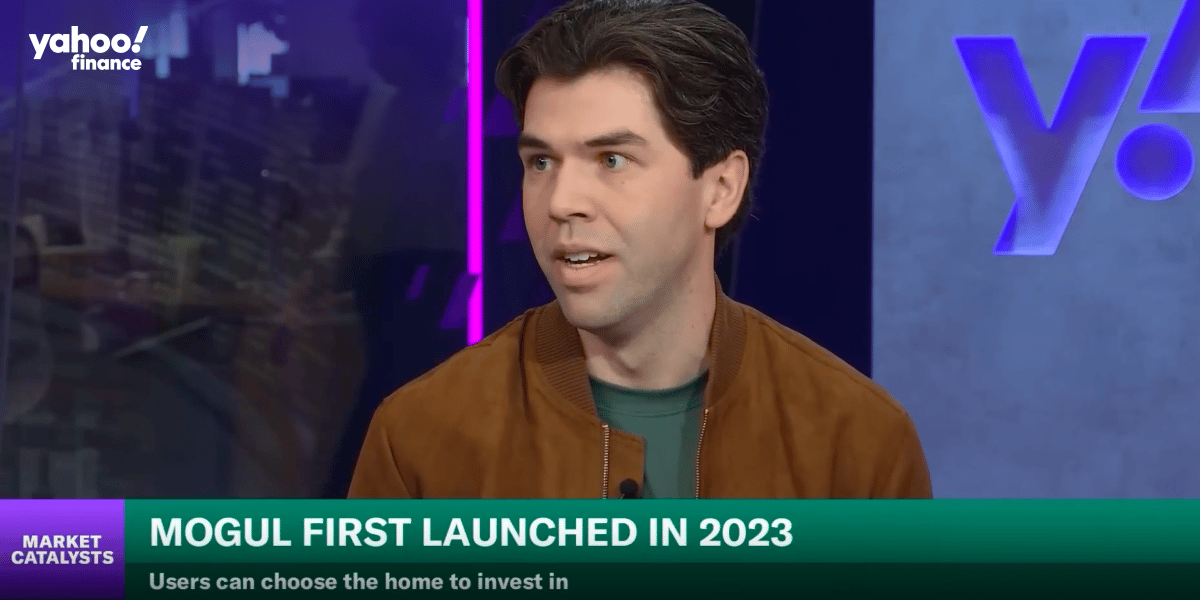
A new report shows 44% of family offices are investing more in residential real estate. Now, you can access these assets with mogul. This platform lets you invest in properties producing +7% yields and 18% IRRs. Plus, they do all the property management for you.
Past performance isn't predictive; illustrative only. Investing risks principal; no securities offer. See important Disclaimers
Ready to take control of your retirement planning? Join our community of L-Plate Retirees who are learning to navigate this next chapter with confidence (and a bit of humour).
Subscribe now and get practical tips delivered to your inbox every weekday – because retirement doesn’t come with a manual, but it should come with a plan.
And if today’s issue gave you a smile or an “aha!” moment, you can always buy us a coffee on Ko-fi ☕ to keep the ideas brewing.
Because retirement doesn't come with a manual... but now it does come with this newsletter.
The L-Plate Retiree Team
(Disclaimer: While we love a good laugh, the information in this newsletter is for general informational and entertainment purposes only, and does not constitute financial, health, or any other professional advice. Always consult with a qualified professional before making any decisions about your retirement, finances, or health.)
Reply