- L-Plate Retiree
- Posts
- The Daily Habit That May Slow Biological Ageing by Four Months
The Daily Habit That May Slow Biological Ageing by Four Months
A randomised trial in Nature Medicine found that taking a daily multivitamin slowed biological ageing by the equivalent of four months in two years.
In partnership with


because retirement doesn’t come with a manual
Interesting study to note. Nevertheless, I much rather eat more variety than taking chemically constituted pills. Perhaps I will try this when my dietary variety declines due to mobility or dental issue.
CS

"A whole civilization will die tonight." Markets fell 1.2%, then clawed it all back.
The quick scan: Tuesday was the most emotionally charged session of the war. Trump posted on Truth Social: "A whole civilization will die tonight, never to be brought back again. I don't want that to happen, but it probably will." Reports emerged of US strikes on Iran's Kharg Island – home to Iran's main oil shipment facility. Markets fell sharply. Then Pakistan's prime minister asked Trump for a two-week extension of his deadline and asked Iran to open the Strait. Markets recovered almost entirely, closing near flat.
S&P 500: +0.08% to approximately 6,617 – erasing a 1.2% intraday loss in the final half-hour; the recovery was driven entirely by Pakistan's diplomatic intervention
Dow Jones: -0.18% to 46,584.46 – the only major index to close in the red; Apple fell nearly 4% on a Nikkei report about setbacks in the foldable iPhone engineering test phase
NASDAQ: +0.10% to 22,017.85 – fractionally positive after swinging 1.7% lower intraday; Broadcom gained 4.5% on a supply deal with Alphabet; Intel rose 3% on xAI chip reports.
What's driving it: Three overlapping events in sequence. First, Trump's Truth Social post and the Kharg Island strike reports sent oil higher and stocks sharply lower – the session's low point. Second, Pakistan's prime minister stepped in with a request for a two-week deadline extension, offering the diplomatic off-ramp markets have been waiting for. Third, Bloomberg reported Apple's foldable iPhone remains on track for its September debut, partially unwinding the Apple slide. VIX rose to 25.78 despite the near-flat close – a signal that traders are not treating the Pakistan intervention as a resolution, just a postponement.
Bottom line: The five-word summary of Tuesday is: nothing happened, but everything moved. The war escalated and de-escalated within the same afternoon. The Pakistan request is not a ceasefire. Trump's deadline has been extended, not withdrawn. For L-Plate Retirees, Tuesday is another illustration of why decisions made in the middle of intraday swings tend to be the wrong ones – and why having a plan written before the crisis is more useful than any real-time response to it.
Become An AI Expert In Just 5 Minutes

If you’re a decision maker at your company, you need to be on the bleeding edge of, well, everything. But before you go signing up for seminars, conferences, lunch ‘n learns, and all that jazz, just know there’s a far better (and simpler) way: Subscribing to The Deep View.
This daily newsletter condenses everything you need to know about the latest and greatest AI developments into a 5-minute read. Squeeze it into your morning coffee break and before you know it, you’ll be an expert too.
Subscribe right here. It’s totally free, wildly informative, and trusted by 600,000+ readers at Google, Meta, Microsoft, and beyond.

Could a Daily Multivitamin Actually Slow How You Age?
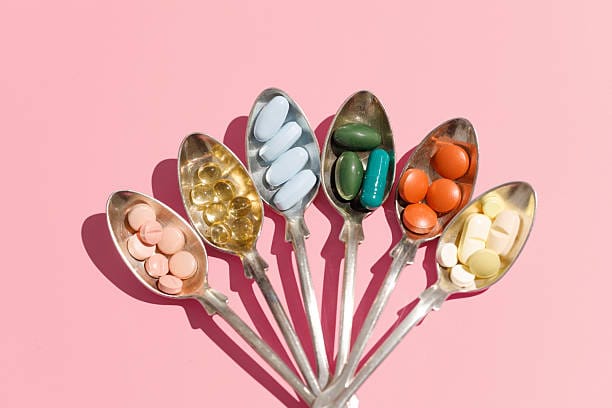
daily multivitamin anyone?
The scoop: There is a difference between how old you are and how old your body is. You probably knew that intuitively. What's newer is the science that lets researchers measure it.
A study published in Nature Medicine – one of the most rigorous medical journals in the world – has found that older adults who took a daily multivitamin supplement over two years experienced biological ageing that was slower, by the equivalent of approximately four months, than those who took a placebo. The participants were all aged 60 and older, and the multivitamin used was Centrum Silver.
The finding comes from the COSMOS trial (Cocoa Supplement and Multivitamin Outcomes Study), a large-scale randomised controlled trial – the gold standard of study design – examining how multivitamin and cocoa flavanol supplements might benefit age-related conditions. The researchers analysed blood samples from 958 healthy participants with an average chronological age of 70, tracking changes in five established markers of biological ageing over one and two years.
"Taking a daily multivitamin may be a viable intervention option when it comes to slowing down the biological aging process," says senior study author Howard D. Sesso, ScD, MPH, of the Division of Preventive Medicine at Mass General Brigham.
Biological age versus chronological age.
The distinction matters here. Your chronological age is simply how many years you've been alive. Your biological age is a measure of how your body is actually ageing at the cellular level – and the two can diverge considerably.
The way researchers measure biological age is through epigenetic clocks. These are tools that track changes in DNA methylation – a chemical modification process in which certain sites within your DNA essentially "switch off" over time. As more sites switch off, biological ageing accelerates.
Crucially, the five epigenetic clocks the researchers used are not arbitrary measurements. They are the most widely validated tools in this field, and two of them are specifically predictive of mortality – meaning they track the methylation changes most closely linked to earlier death.
In the COSMOS analysis, participants who took the daily multivitamin showed deceleration across all five epigenetic clocks compared to those who took the placebo. In practical terms, the rate of biological ageing slowed by approximately 1.5 to two months per year – adding up to around four months over the two-year study period.
Who benefited most.
One of the study's more interesting findings is that the effect was not uniform. Those participants who were already ageing faster biologically at the start of the study showed greater benefit from the multivitamin than those who were ageing at a more typical rate.
This makes intuitive sense: if the multivitamin works by ensuring the body has the full complement of essential nutrients, those who were most deficient or most depleted would have the most ground to recover.
Why might it work?
The mechanism isn't fully understood. But Sesso's hypothesis centres on what a multivitamin uniquely provides: the full spectrum of essential vitamins and minerals, all at once.
"A daily multivitamin is unique in that it contains all essential vitamins and minerals, plus a few other bioactive compounds that focus more on the natural interactions of nutrients," he says. "A multivitamin may mimic the importance of a healthy dietary pattern to improve health span."
The hypothesis is that it's not any single nutrient driving the effect – it's the combination. Something about having all of them present simultaneously, at adequate levels, may replicate the biological benefit of eating a genuinely varied and nutritious diet. For older adults whose dietary variety has declined – through reduced appetite, reduced mobility, cooking fatigue, or dental issues – a multivitamin may be compensating for what food is no longer reliably providing.
The findings also help explain a separate result from the broader COSMOS trial: that multivitamin takers showed reduced risk of lung cancer and lower rates of cognitive decline. If the multivitamin is actually slowing biological ageing, those downstream benefits become more mechanistically plausible.
What the study is – and isn't.
This is a randomised controlled trial published in Nature Medicine – worth taking seriously.
At the same time, some perspective: 958 participants is a meaningful sample for this type of research, but not enormous. The effect size – four months of slower ageing over two years – is real but modest. And while the epigenetic clocks used are validated tools, biological ageing remains an active research area and the clocks are not the same as clinical outcomes.
Sesso himself is clear on what the research does and doesn't say. A multivitamin, he stresses, "shouldn't be looked at as a replacement" for a nutritious diet, good sleep, physical activity, and social connection. "It's very important to focus on eating a nutritious diet, getting a good night's sleep and staying physically and socially active," he says. "A multivitamin can be a positive addition to your daily regimen, but it shouldn't be looked at as a replacement for those vital lifestyle habits."
The practical upshot.
For most older adults with no contraindicated conditions, a daily multivitamin is low-cost, low-risk, and now has published evidence from a well-designed trial suggesting it may modestly slow biological ageing. Sesso characterises it as "a low-risk, safe and cost-effective option that could be a viable part of slowing down the aging process."
The caveat remains: food first. A diet genuinely rich in diverse vegetables, lean protein, whole grains and fruit is doing more for your biological age than any supplement. But for the large proportion of older adults who are not consistently hitting that standard, a daily multivitamin is a reasonable, inexpensive backstop.
Actionable takeaways for L-Plate Retirees:
The effect is real but modest – four months over two years. Don't read this as a dramatic intervention. Read it as one low-cost, low-effort habit with credible evidence behind it, layered into a broader approach to health. Modest effects compound over time.
Those already ageing faster benefit more. If you know your biological age is higher than your chronological age – through a blood test, an epigenetic clock assessment, or simply through your health history – the evidence suggests you stand to gain more from this habit than someone ageing at a typical rate.
The mechanism points to nutritional completeness, not any single nutrient. This isn't a case for megadosing vitamin C or taking high-dose B vitamins. It's a case for covering the full spectrum at reasonable levels – which is what a standard multivitamin like Centrum Silver does. More is not better here.
Food remains the superior delivery vehicle. A multivitamin is "if that's not possible" medicine, in Sesso's framing. If your diet is genuinely varied and nutritious, the marginal gain from adding a multivitamin is smaller. If your diet has gaps – and most older adults' diets do – a multivitamin is filling in where food has left off.
Check for contraindications before starting. Most healthy older adults can take a standard multivitamin without issue. But some interact with medications – particularly blood thinners, which can be affected by vitamin K levels, and certain heart medications. Worth a quick check with your GP if you're on regular prescriptions.
This is additive to lifestyle, not a replacement. Diet, sleep, exercise, social connection: the study's senior author lists all of these as more important than the multivitamin. Today's findings are one more reason to cover the basics – not a reason to use a supplement instead.
Your Turn:
Are you already taking a daily multivitamin? If not, is today's research enough to prompt you to start – and if not, what would it take?
The study found that those already ageing faster biologically benefited more. Do you have any sense of whether your biological age tracks ahead of or behind your chronological age – and what's your basis for that impression?
Sesso's hierarchy is clear: food, sleep, exercise and social connection come first; the multivitamin is an addition. Looking honestly at your current habits, which of those four foundations is most in need of attention?
👉 Hit reply and share your thoughts – your answers could inspire fellow readers in future issues.
If today's issue added something useful to your health toolkit, consider shouting L-Plate Retiree a coffee on Ko-fi.
A Senior Analyst Sees Half a Billion Dollar Potential.

Kingscrowd Capital's senior analyst reviewed RISE Robotics and projected potential growth to a $500 million valuation. The community round is open now on Wefunder. You don't have to be an institutional investor to get in at today's price.
The L-Plate Retiree community is just beginning, and we’re figuring this out together–no pretense, no judgment, just honest conversation about navigating this next chapter.
Subscribe now, or share it with a friend, to get weekly insights, practical tips, and the occasional laugh to help you prepare for or thrive in retirement. Unlike other newsletters that assume you already know everything, we keep it simple and human.
And if today’s lifestyle musings brightened your day, you can toss a coffee into our Ko-fi tip jar ☕. Think of it like leaving a tip for your favourite busker – only this busker writes about retirement.
Because retirement doesn’t come with a manual… but now it does come with this newsletter.
The L-Plate Retiree Team
(Disclaimer: While we love a good laugh, the information in this newsletter is for general informational and entertainment purposes only, and does not constitute financial, health, or any other professional advice. Always consult with a qualified professional before making any decisions about your retirement, finances, or health.)
Reply