- L-Plate Retiree
- Posts
- The Oncologist's Secret: Why Your Daily Walk Is Fighting Cancer
The Oncologist's Secret: Why Your Daily Walk Is Fighting Cancer
A leading cancer specialist explains how 2.5 hours of exercise a week cuts the risk of seven cancers – and why it's never too late to start.
In partnership with


because retirement doesn’t come with a manual
The correlation for sitting and colon cancer is eye-popping! The potential “prevention“ is equally within reach. Question is, will you make the change to stand if that’s an option?
CS

The S&P 500 just closed above 7,000 for the first time in history. The NASDAQ hit a new all-time high.
The quick scan: Wednesday was a milestone session. The S&P 500 closed at 7,022.95 – its first-ever close above 7,000 and a new all-time record, surpassing the previous intraday high of 7,002.28 from January 28. The NASDAQ crossed 24,000 for the first time, closing at 24,016.02 on its eleventh consecutive day of gains. The catalyst: Bloomberg reported that President Trump has signalled he may be preparing to wind down the Iran conflict, and megacap technology stocks ran hard on the news. The Dow was the outlier, slipping slightly as industrial names pulled it lower.
S&P 500: +0.80% to 7,022.95 – a new all-time closing record; the index has now fully erased all losses since Operation Epic Fury began and then some, closing higher than it has ever closed before
Dow Jones: -0.15% to 48,463.72 – the session's laggard, dragged by Caterpillar (-1.97%), Cisco (-1.50%) and Coca-Cola (-1.23%); Bank of America and Morgan Stanley both beat earnings expectations but weren't enough to offset the industrials drag
NASDAQ: +1.59% to 24,016.02 – a new all-time high and the eleventh straight day of gains; Tesla surged 7.63% on CEO Musk's AI5 chip update, Microsoft added 4.63%, with the broader tech complex carried by AI optimism and strong ASML earnings.
What's driving it: Two things converged on Wednesday. Trump's reported signal that the Iran war may be approaching its end removed the single biggest overhang on markets since late February. At the same time, AI-related earnings momentum – ASML's strong quarterly results, Microsoft's surge, Musk's chip update – reminded investors that the technology tailwind underneath this market hasn't gone anywhere. VIX fell to 18.17. Oil held steady at $91. The Paris summit on reopening the Strait of Hormuz is scheduled for Friday, hosted by Starmer and Macron. The next geopolitical checkpoint is that meeting and any subsequent US-Iran talks.
Bottom line: From blockade announcement to all-time high in nine trading sessions. Markets have voted – emphatically – that the Iran war is ending rather than escalating. That view may prove correct or it may be premature; Friday's Paris summit will be telling. For L-Plate Retirees holding a diversified portfolio through this period, the lesson of the past two weeks is the same one it always is: the recoveries are faster than they look when you're in the middle of the fear.
AUM Doesn’t Grow in Your Inbox

Your highest-value work is advising, not administrating. But many advisors still spend too much time in their inbox, coordinating details, chasing tasks, and keeping operations moving. That is not just frustrating, it is expensive. BELAY’s free Financial Advisor’s Delegation Guide helps you spot where time is leaking, where support would help most, and how smarter delegation can free you up for clients, strategy, and revenue-generating work.

I Exercised to Protect My Heart. Then I Discovered It Was Also Protecting Me From Cancer
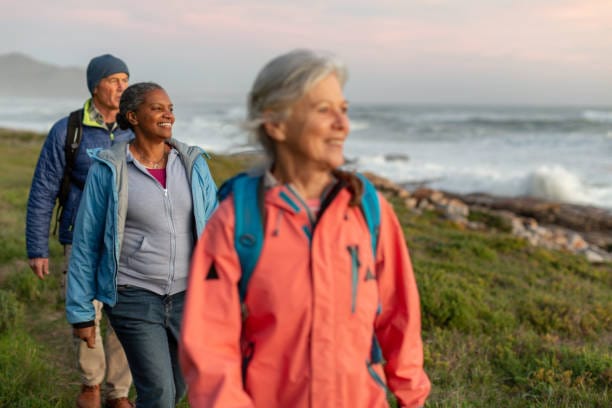
brisk walking is one you can start today!
The scoop: Dr Mikkael Sekeres didn't start exercising to prevent cancer. He started exercising because the men in his family kept dying of heart attacks.
His father. Both grandfathers. Cardiac arrest, each of them. Knowing that up to 60% of susceptibility to heart disease is genetic, Sekeres – now Chief of Hematology at the University of Miami's Sylvester Comprehensive Cancer Center – started moving in college and hasn't stopped. Thirty minutes of aerobic exercise, every day.
"What I didn't realise when I started," he writes in a Washington Post column published this week, "was that exercising would also substantially lower my risk for developing certain cancers."
That line is the hook. Because most of us exercise – when we do – thinking about weight, or heart health, or mood. Cancer doesn't tend to feature in the mental calculus. It probably should.
The numbers.
The largest piece of evidence Sekeres cites is a Journal of Clinical Oncology study of over 750,000 men and women across the US, Europe and Australia – median age 62, followed for an average of ten years. The exercise threshold was modest: 7.5 to 15 MET-hours per week, which translates to 2.5 to five hours of moderate-intensity activity, such as brisk walking.
At that level, the cancer risk reductions were significant across seven cancer types:
Breast cancer: 6–10% lower risk
Colon cancer (men): 8–14% lower risk
Endometrial cancer: 10–18% lower risk
Kidney cancer: 11–17% lower risk
Liver cancer: 18–27% lower risk
Lymphoma (women): 11–18% lower risk
Multiple myeloma: 14–19% lower risk
And for several cancers – breast, colon, endometrium, oesophagus, head and neck – the relationship was dose-responsive. The more you exercise, the lower your risk.
Why does exercise protect against cancer?
The mechanisms are multiple, which is one reason the protection is so broad.
Studies in postmenopausal women aged 50 to 75 show that regular exercise reduces oestrogen levels – and lower lifetime oestrogen exposure reduces the risk of hormone receptor-positive breast cancer. Exercise also keeps insulin levels in check; elevated insulin has been linked to cancer development and progression, particularly in breast and colon cancers. Regular physical activity reduces chronic inflammation and improves immune function – both of which matter in cancer risk.
There's also a less-discussed mechanical benefit. Exercise improves gastrointestinal motility – the speed at which food moves through the digestive system – which reduces the time carcinogens spend in contact with the cells lining the gut. And it prevents obesity, which is independently linked to higher cancer rates across multiple types.
Breast cancer: the evidence is deep.
A meta-analysis of 38 studies covering over four million women and 116,000 breast cancer diagnoses found that the most active women had a 12% lower risk of developing breast cancer than the least active – regardless of BMI or whether they were pre- or post-menopausal.
The Nurses' Health Study – which followed over 95,000 women for an average of 20 years – found that women who walked briskly for around an hour a day had a 15% lower risk of breast cancer.
The most encouraging finding: women who had low physical activity before menopause but increased their activity afterwards still had a 10% lower risk of breast cancer. It's never too late to start.
Colorectal cancer: sitting is the enemy.
The NIH-AARP Diet and Health Study tracked nearly 500,000 people over 50, and identified more than 4,700 colon and rectal cancer diagnoses. Exercising five or more times per week was associated with a 21% reduced risk of colon cancer in men and 15% in women, and a 24% reduced risk of rectal cancer in men.
The flip side is equally striking. Men who spent nine or more hours a day sitting had a 60% increased risk of colon cancer compared with those who sat for fewer than three hours. Not 6%. Not 16%. Sixty.
If there's a single statistic in this article worth writing on a Post-it note and putting on your monitor, that might be it.
What if you've already been diagnosed?
Sekeres is clear on this: the evidence does not stop at prevention.
Multiple studies show that exercise after a cancer diagnosis reduces rates of cancer death, overall mortality, and recurrence. There's even a small study showing that a single exercise session can inhibit cancer cell growth. The implication, as Sekeres puts it: "Even if you can only add brief periods of physical activity to your day, it's always worth it. Every bit counts."
How much, exactly?
The American Cancer Society recommends 150 to 300 minutes of moderate-intensity exercise per week – or 75 to 150 minutes of vigorous intensity. Moderate means brisk walking, cycling under 10 mph. Vigorous means running, cycling faster.
Short vigorous bursts work too. Even two or more hours of vigorous activity per week was associated with reduced risk of head and neck cancer, lung cancer, and breast cancer. The dose-response relationship means any exercise is better than none, and more is generally better than less.
For the L-Plate Retiree audience: 30 minutes of brisk walking five days a week gets you to 150 minutes. That's the floor, and it's a floor most of us can reach.
Actionable takeaways for L-Plate Retirees:
2.5 hours of moderate exercise per week is the target that delivered results across seven cancer types. That's 30 minutes of brisk walking five days a week – achievable, not extreme. The Journal of Clinical Oncology study used this as its lower threshold, and the risk reductions were meaningful across breast, colon, endometrial, kidney, liver, lymphoma and multiple myeloma.
Sitting for nine or more hours a day raises colon cancer risk by 60%. This statistic deserves to be taken seriously. If you're retired and spending long periods at a desk, on a couch, or in front of a screen, consider a standing desk, walking breaks every hour, or deliberate afternoon movement as a structural habit rather than an optional extra.
It genuinely is never too late. Women who were inactive before menopause but increased activity afterwards still reduced their breast cancer risk by 10%. People already diagnosed with cancer can still lower their mortality risk through exercise. The biology doesn't care how long you've been sedentary – it responds to what you do now.
Exercise works via multiple protective pathways simultaneously. Lower oestrogen, lower insulin, reduced inflammation, better immune function, faster gut transit, and obesity prevention – all at once. This is why the cancer protection is broad across types, not specific to one. The same hour of walking is doing many things at once.
Vigorous intensity is more efficient, not more necessary. If 150 minutes of brisk walking feels like a lot, 75 minutes of running or fast cycling delivers comparable benefit. And even vigorous bursts – rushing up stairs, moving fast in daily life – have been shown in other research to carry risk reduction. Intensity is a lever you can pull if time is short.
If you've been diagnosed, keep moving. The evidence on exercise post-diagnosis is consistent: it reduces recurrence, reduces cancer mortality, and improves overall survival. Talk to your oncologist about what's appropriate for your situation, but the conversation is worth having.
Your Turn:
The article's author didn't start exercising to prevent cancer – he started to protect his heart. Did you have a similar moment where you took up exercise for one reason and discovered the benefits were broader than you expected?
The 60% increased colon cancer risk for heavy sitters is a striking number. Does that change how you think about the hours you spend sitting each day, and do you have any habits already in place to break it up?
Exercise post-diagnosis is an area most people don't think about. If you or someone you know has been through a cancer diagnosis, was exercise part of the conversation with any of the medical team?
👉 Hit reply and share your story – your insights could inspire fellow readers in future issues.
If today's issue made you want to get off the chair and do something about it, consider supporting L-Plate Retiree on Ko-fi.
5 Defense Stocks Most Investors Haven't Found Yet

AI-integrated systems. Satellite infrastructure. Advanced aerospace platforms. Five companies are winning significant Pentagon contracts in each, and we profiled all of them in one free research report.
If these insights resonate with you, you’re in the right place. The L-Plate Retiree community is just beginning, and we’re figuring this out together – no pretense, no judgment, just honest conversation about navigating this next chapter.
Subscribe now to receive daily insights, practical tips, and the occasional laugh to help you thrive in retirement. We speak human here – no jargon without explanation, no assuming you’ve been investing since kindergarten.
And if today’s investing note hit the spot, you can buy us a coffee on Ko-fi ☕. Consider it your safest trade of the week – low risk, high return (in good vibes).
Because retirement doesn’t come with a manual… but now it does come with this newsletter.
The L-Plate Retiree Team
(Disclaimer: While we love a good laugh, the information in this newsletter is for general informational and entertainment purposes only, and does not constitute financial, health, or any other professional advice. Always consult with a qualified professional before making any decisions about your retirement, finances, or health.)
Reply