- L-Plate Retiree
- Posts
- The Sports That Add Nearly 10 Years to Your Life – What the Copenhagen Study Reveals
The Sports That Add Nearly 10 Years to Your Life – What the Copenhagen Study Reveals
Why tennis players outlive joggers by six years and what the social element of sport has to do with longevity
In partnership with


because retirement doesn’t come with a manual
I’ve only ever played tennis once in my life, in my teens. Guess I have better chances with badminton since the Wife plays that too.
CS

Markets roared back as Trump eased Greenland military threats – tech led the recovery with chips soaring up to 11%
The quick scan: US stocks posted their best session in months Wednesday as investors exhaled after President Trump ruled out military force in his Greenland pursuit while speaking at the World Economic Forum in Davos. All three major indices reclaimed more than half of Tuesday's brutal losses, with technology shares leading the charge as geopolitical fears receded. The VIX fear gauge retreated from its elevated levels as risk appetite returned.
S&P 500: +1.16%, closing at 6,875.62 – the benchmark added 79 points in a broad-based relief rally, though still remains negative for 2026
Dow Jones: +1.21%, ending at 49,077.23 – industrial stocks climbed 589 points as Trump's softer rhetoric eased fears of abrupt escalation in US-Europe tensions
NASDAQ: +1.18%, settling at 23,224.82 – tech stocks rebounded sharply with semiconductor names like AMD, Intel, and Micron surging between 6.6% and 11.7%.
What's driving it: Trump's Davos speech provided the reassurance markets craved, stating the US wouldn't use force to acquire Greenland while maintaining economic pressure options. The easing of immediate military concerns prompted rebounds in both equities and Treasuries after Tuesday's risk-off stampede. However, Trump reiterated his intention to pursue Greenland control and kept tariff threats against European allies on the table, leaving trade uncertainty intact. Netflix fell 2.2% on warnings of higher content spending related to its Warner Bros. Discovery deal, while United Airlines gained 3% on strong earnings. Small caps continued their remarkable run, with the Russell 2000 outperforming large caps for the 13th consecutive session – matching a streak last seen in June 2008.
Bottom line: This is what relief rallies look like when worst-case scenarios get dialed back. For L-Plate Retirees, Wednesday's rebound doesn't erase Tuesday's reminder that geopolitical shocks can arrive suddenly and violently. The investors who stayed calm and had dry powder ready were positioned to act – those without preparation just white-knuckled through the volatility.
One Habit You’ll Keep
By this time of the year, most New Year goals are already slipping. That’s why the habits that last are the simple ones.
AG1 Next Gen is a clinically studied daily health drink that supports gut health, helps fill common nutrient gaps, and supports steady energy.
With just one scoop mixed into cold water, AG1 replaces a multivitamin, probiotics, and more, making it one of the easiest upgrades you can make this year.
Start your mornings with AG1 and get 3 FREE AG1 Travel Packs, 3 FREE AGZ Travel Packs, and FREE Vitamin D3+K2 in your Welcome Kit with your first subscription.

Want an Extra Decade? Pick Up a Racquet – The Surprising Science of Sports and Lifespan
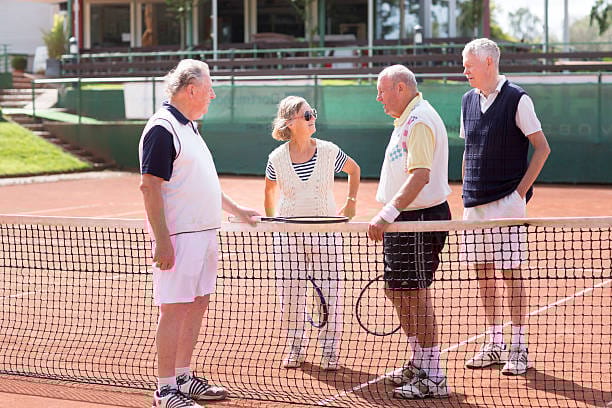
studies shown that tennis adds 9.7 years to one’s lifespan
The scoop: Not all exercise is created equal when it comes to adding years to your life. Sure, any movement beats sitting on the couch – that's well established. But what if certain sports could add nearly a decade to your lifespan while others barely move the needle past a year or two?
The Copenhagen City Heart Study followed more than 8,500 people for 25 years to answer exactly this question. The results weren't what anyone expected. Tennis players lived an average 9.7 years longer than sedentary people. Badminton players added 6.2 years. Meanwhile, those dedicated gym-goers logging hours on treadmills and weight machines? Just 1.5 extra years.
The gap is staggering. And it's not about intensity or calorie burn or how hard you're working. Something else is happening with certain sports that fundamentally changes the longevity equation.
The longevity league table that surprised researchers
The Copenhagen study's findings created a clear hierarchy of sports ranked by their impact on lifespan compared to sedentary lifestyles:
Tennis added 9.7 years. Badminton delivered 6.2 years. Soccer contributed 4.7 years. Cycling provided 3.7 years. Swimming gave 3.4 years. Jogging added 3.2 years. Calisthenics brought 3.1 years. Health club activities contributed 1.5 years.
Notice the pattern? The sports at the top aren't necessarily the most intense or demanding. Marathon runners and hardcore gym enthusiasts aren't dominating the list. Instead, something else separates the winners from the also-rans.
The answer lies in two factors researchers identified as critical: social engagement and sustainability over a lifetime.
Why tennis players live nearly a decade longer
Tennis works both upper and lower extremities. It's high-intensity cardiovascular activity that improves stamina, endurance, eye-hand coordination, and focus. One of the best predictors of cardiovascular disease risk is VO₂ max – the maximum amount of oxygen the body can absorb and use during exercise.
For most middle-aged adults, VO₂ max sits between 30 and 40 ml/kg/min. For middle-aged male tennis players, that number climbs to 50 ml/kg/min. Female tennis players in the same age group hit 44 ml/kg/min. That's lung capacity and cardiovascular fitness in a completely different league.
But here's what really sets tennis apart: players participate well into their 80s and even 90s. The sport scales with age. At 75, the game might be less aggressive, but it's still playable. Unlike rugby or marathon running – sports that typically end by age 35 or 40 – tennis offers decades of continuous participation.
A 2020 study found that regular tennis players over 45 have lower rates of heart disease and obesity than non-players. A 2024 British survey reported that people playing at least once a week showed a 13% higher rate of wellbeing than those who didn't play.
The longevity benefits accrue with just a few hours of play per week, consistently maintained over years. Despite tennis's country club image, free public courts and community centre programs make it remarkably accessible. Equipment costs remain minimal – decent racquets available at discount stores.
The social element nobody expected
Here's where the research gets interesting. As one sports medicine specialist noted, "As you go down the list of sports that increase longevity, you can see they're not sports you do alone. Badminton you don't play alone, soccer you don't play alone. While you can technically cycle alone, people often cycle in a group – they cycle and then have brunch together."
The interactive nature of racquet sports offers crucial mental health benefits beyond physical conditioning. By fostering social connection, they prevent loneliness and depression – two factors with documented impacts on mortality.
Studies show that adults over 50 who participate in group sports are more likely to remain active long-term. People who exercise with others tend to go longer, feel more committed and motivated, and enjoy it more. That enjoyment translates into consistency, which compounds over decades.
Pickleball research found players experience psychological benefits including personal wellbeing, life satisfaction, decreased stress and depression, and overall happiness. These findings help explain why pickleball has become the fastest-growing sport worldwide, with 32–50 million Americans playing at least once in the previous year.
And contrary to assumptions, pickleball isn't just for older adults – the average age for beginning players is now 35.
Why sustainability matters more than intensity
Consider two 20-year-olds. One takes up rugby, the other tennis. The rugby player gets tremendous physical benefits and team culture value for 15 years before injuries or age force retirement around 35. The tennis player continues for 50-plus years, playing less aggressively but never stopping.
Over a lifespan, the tennis player accumulates 25–50 years of continuous physical and social benefits. The rugby player gets 15 years of benefit followed by decades of potential deconditioning in retirement.
This sustainability factor explains why some "easier" sports outperform more intense alternatives in longevity studies. It's not that rugby is bad – it's that the cumulative benefit of a sport you can maintain for life outweighs short-term intensity gains from activities that become unsustainable.
Running faces similar challenges. While beneficial for overall health, findings suggest people who run excessively may not see the same life expectancy benefits as swimmers or cyclists. A balanced approach becomes crucial to avoid joint strain, especially in older adults.
Moderate activities like walking provide heart health benefits but don't correlate as strongly with longevity as more dynamic activities like swimming or cycling.
The accessibility advantage
Swimming offers a low-impact alternative suitable for all ages. Regular swimmers show a 28% lower mortality risk compared to non-swimmers. The activity enhances cardiovascular health while building muscle strength and flexibility without joint stress.
Cycling lowers cardiovascular disease risk by 50% among regular participants. It supports joint health in knees and hips while improving cardiovascular fitness. Growing cycling infrastructure in many cities makes integrating the activity into daily routines both practical and effective.
Badminton research from Japan found that 30 minutes of moderate-intensity weekly play enhances cognitive function, while three hours of recreational play per week effectively manages blood pressure.
The key across all these sports: finding something enjoyable enough to maintain consistently. Consistency over decades matters more than perfect execution or maximum intensity.
What this means for the final working years
For those in their 50s and 60s, the message is clear: it's not too late to start, and the sport chosen matters as much as the commitment to doing it.
If current exercise consists mainly of solo gym sessions or solitary running, consider adding a social sport component. Join a tennis league. Try pickleball at the local community centre. Find a cycling group. Take up badminton.
The physical benefits matter, but the social connections might matter just as much – or more – for longevity outcomes. The combination of cardiovascular conditioning, strength building, balance work, and regular social interaction creates a powerful cocktail for healthy ageing.
And perhaps most importantly: choose something sustainable for the next 20–30 years, not just the next 20–30 weeks. A sport played at 75 beats a sport abandoned at 45, regardless of which one burns more calories today.
Actionable takeaways for L-Plate Retirees:
Add a racquet sport to the weekly routine if possible: Tennis, badminton, or pickleball offer the highest longevity benefits according to research. Start with beginner lessons at community centres or public courts. The investment in learning pays dividends for decades if the habit sticks.
Prioritise sports with built-in social elements over solo exercise: If currently running alone or using gym equipment in isolation, add group cycling rides, walking clubs, or team sports. The social interaction provides mental health benefits that amplify physical gains and increase consistency.
Choose sustainability over intensity when evaluating new activities: Ask whether this sport can realistically continue at 70 or 80, even at reduced intensity. Activities that scale with age deliver compounding benefits that high-impact sports can't match over a lifetime.
Aim for consistency rather than perfection in execution: A few hours per week, every week, for years matters more than perfect form or maximum effort. The Copenhagen study showed benefits accrued with regular moderate participation, not elite performance.
Combine cardiovascular work with activities that build balance and coordination: Sports like tennis naturally integrate cardio, strength, balance, and agility training. This multi-system engagement explains part of their superior longevity benefits compared to single-dimension activities.
Don't abandon current exercise – supplement it strategically: If already swimming, cycling, or doing other beneficial activities, keep them. Just consider adding a social sport component for the mental health and community benefits that enhance long-term adherence and outcomes.
Your Turn:
What sport could realistically become a 20-year commitment starting today – something enjoyable enough to maintain through the 70s and beyond?
Looking at current exercise habits, how much involves other people versus solo activity, and could that balance shift?
If the goal is to still be active at 85, which sports or activities currently being done would still be possible then, and which ones need supplements or replacements?
👉 Hit reply and share your story – your insights could inspire fellow readers in future issues.
If this research on sports and longevity changed how fitness choices will be evaluated going forward, consider supporting L-Plate Retiree on Ko-fi. Contributions keep these evidence-based health and fitness deep-dives coming – focused on what actually extends healthspan, not just what's trending or popular. Every coffee matters.
Now Men Can Fight Eye Bags From Home

Worried about eyebags, dark spots and wrinkles? Particle Face Cream is the #1 selling solution for men to tackle these issues. Boasting over 1,000,000 satisfied customers, Particle is easy, effective and worth adding to your routine. Get 20% off now with the code BH20!
If these insights resonate with you, you’re in the right place. The L-Plate Retiree community is just beginning, and we’re figuring this out together – no pretense, no judgment, just honest conversation about navigating this next chapter.
Subscribe now to receive daily insights, practical tips, and the occasional laugh to help you thrive in retirement. We speak human here – no jargon without explanation, no assuming you’ve been investing since kindergarten.
And if today’s investing note hit the spot, you can buy us a coffee on Ko-fi ☕. Consider it your safest trade of the week – low risk, high return (in good vibes).
Because retirement doesn’t come with a manual… but now it does come with this newsletter.
The L-Plate Retiree Team
(Disclaimer: While we love a good laugh, the information in this newsletter is for general informational and entertainment purposes only, and does not constitute financial, health, or any other professional advice. Always consult with a qualified professional before making any decisions about your retirement, finances, or health.)
Reply