- L-Plate Retiree
- Posts
- What a 27-Year-Old's 100-Day Cycling Journey Teaches Us About Starting
What a 27-Year-Old's 100-Day Cycling Journey Teaches Us About Starting
He started with 15 minutes of walking and no trainer. What he found about consistency, joint health, and milestones applies beyond his age group.
In partnership with


Most adults with ADHD don't realize how deeply it affects their daily life—from emotional regulation to working memory. This free personalized quiz reveals your ADHD trait score across 5 key areas and shows you exactly where to focus first. Takes 10 minutes, changes everything.

because retirement doesn’t come with a manual
Great principle that should apply to older bodies despite the lower metabolism and longer recovery time. Even if it takes longer to lose the extra weight, it will be worth when you get there.
CS

Fed held. Oil hit $100. Trump rejected Iran's Hormuz proposal. The Magnificent Four report after the bell.
The quick scan: Wednesday was one of those sessions where the news was everywhere and markets barely moved. The S&P 500 and NASDAQ both finished within 0.04% of flat – the Dow was the outlier, falling 0.57% as oil continued its climb. The Fed held rates unchanged, as expected. Trump rejected Iran's latest proposal to reopen the Strait of Hormuz and told aides to prepare for an extended blockade. WTI crude briefly crossed $100, Brent hit $112.70. Powell confirmed he will remain on the Fed board while a headquarters renovation probe continues – removing one leadership uncertainty. After the bell, Microsoft, Alphabet, Meta and Amazon – roughly $11 trillion in combined market cap – all reported. The week's real verdict will be delivered Thursday morning.
S&P 500: -0.04% to 7,135.95 – essentially flat; the index held above 7,100 despite elevated oil and geopolitical pressure; Visa's 17% revenue quarter and Starbucks' earnings beat provided ballast against the oil-driven drag
Dow Jones: -0.57% to 48,861.81 – fell 280.12 points, its fifth consecutive losing day; energy and industrial names weighed; the Dow has now pulled back 1.26% from its April 27 record close while the S&P and NASDAQ have held their ground
NASDAQ: +0.04% to 24,673.24 – the day's quiet outperformer; Visa surged more than 5%, Starbucks added nearly 5%, T-Mobile rose 2%; the NASDAQ held the flatline as markets waited for the post-bell Magnificent Four results.
What's driving it: Three things kept markets pinned. The Fed held rates – language unchanged, no cut signal. Powell staying on the board removes the chair transition risk. Trump rejected the Hormuz proposal and is reportedly preparing for an extended blockade, pushing oil above $100 – Brent at $112.70, highest since March 31. Booking Holdings slid 5% citing the Middle East conflict, the second major company this week to quantify the war's corporate impact. And the Magnificent Four reporting after the bell kept most participants from making large moves in either direction.
Bottom line: S&P and NASDAQ essentially flat on a day when oil hit $100 and Trump rejected Iran's peace proposal. Resilience or complacency – the Mag Four results will answer that. By the time this newsletter reaches you, we'll know.
These 5 Defense Stocks Could Define the Next Decade

Every major shift in defense procurement creates a new set of market winners. The current shift toward AI-enabled systems, satellite infrastructure, and advanced aerospace is moving faster than most investors realize, and the companies leading it are still early enough to offer real upside. We put together a research report that names five of them, breaks down their technology and contract position, and explains the investment timing. Whether you're actively building a defense allocation or just want to understand where the sector is heading, it's worth 10 minutes.

He Started With 15 Minutes. He Lost 28kg. Here's What Actually Matters.
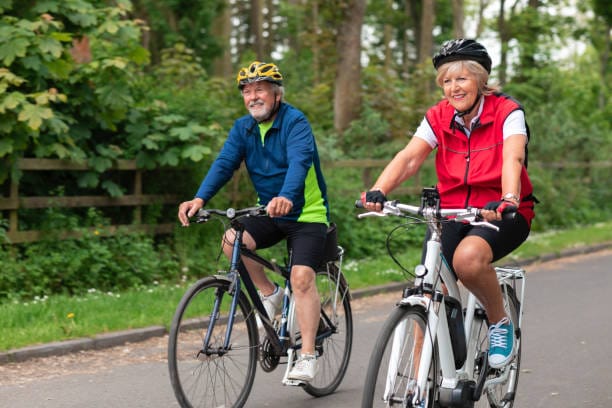
the wife needs to learn so we, too, can take this photo
The scoop: In October 2025, a 27-year-old Vietnamese man named Anh Khoa spent an afternoon scrolling through social media and found himself staring at images of fit Korean actors and peers his age who were leading healthy, active lives.
"If they can do it, why can't I?"
The next day, he set up a camera, began documenting his journey online, and started exercising. He weighed 106 kilograms and had rarely exercised in his life.
One hundred days later, he weighed 78 kilograms.
Twenty-eight kilograms lost. No weight-loss pills. No extreme dieting. No personal trainer. Smaller portions and a bicycle – primarily an indoor one.
The first month: the hardest part is starting.
Khoa's first month was, by his own account, the most challenging. No trainer to tell him what to do. He reduced his food intake and followed workout videos online. He started with 15 minutes of walking and built gradually to an hour.
The gym was not, at first, a welcoming place. He was significantly overweight in an environment where that can make you a target for judgment. He went anyway.
By the end of the first month, he had found his rhythm. The gym had become, as he puts it, his "second home" – sometimes spending four to five hours a day there. Then something shifted.
He realised that prolonged walking was putting pressure on his knees.
So he switched to cycling.
Why the switch to cycling matters – especially for this audience.
This is the pivot in Khoa's story that deserves the most attention from readers of this newsletter.
At 27 and 106 kilograms, Khoa's knees were already protesting under the load of extended walking. He didn't push through it. He adjusted. He found an exercise that delivered the cardiovascular benefit without the joint cost – and it turned out to be more effective.
For readers in their 50s, 60s, and 70s, the joint dimension of exercise choice is not a secondary consideration. It's often the primary one. The exercises that built fitness in your 30s and 40s can cause genuine harm in later decades – and the instinct to push through pain the way a younger body can is one of the more reliable ways to end an exercise habit permanently.
Running places forces of three to eight times body weight on the knees with each stride. Cycling places almost none. The same cardiovascular output, a fraction of the impact. This is why both the NIH and the WHO specifically recommend cycling as a preferred exercise for older adults and mobility-limited individuals.
The research is unambiguous. A 2023 scoping review of 27 studies in Frontiers in Sports Medicine concluded that cycling meets 83% of WHO physical activity guidelines for older adults while directly addressing age-specific physiological declines. The Journal of Rheumatology has found that regular cycling significantly reduces joint pain and stiffness while improving muscle strength in middle-aged and older adults with osteoarthritis. Cycling 40 kilometres per week – which translates to roughly 5–6km per day – has been associated with a 50% reduction in coronary heart disease risk, according to research cited by the British Medical Association.
What he actually did.
Khoa's approach was disciplined but not extreme. He worked out in phases, not in one sustained sprint.
In his first month, he focused on building the habit and getting the form right. "Instead of lifting heavy weights for quick results, I focused on lighter exercises with proper form to avoid injury," he says. He lost approximately 18 kilograms in the first 60 days.
In the second month, with cycling as his primary exercise, he lost another five kilograms. In the final 40 days, another five. The rate slowed as his weight came down – which is exactly what physiology would predict.
The food approach was simple: smaller portions, no elimination diets, no supplements. The exercise did the work.
"Don't focus on a distant goal," Khoa says. "Break it down into smaller milestones."
This is the most transferable insight in the whole story. A hundred days sounds like a long time. Fifteen minutes of walking does not. The first decision wasn't "I will lose 28 kilograms." It was: tomorrow, I will get on the bike.
What this looks like for older bodies.
The honest addendum for this audience is that Khoa's rate of loss – 28 kilograms in 100 days – reflects his specific circumstances: a young man, significantly overweight, with a large initial calorie deficit and a metabolism that responds quickly. For someone in their 60s, the same amount of cycling will produce different results. That's not a failure of the method. It's physiology.
What translates exactly is the approach. The progressive start – 15 minutes, then 30, then an hour. The switch from high-impact to low-impact when the joints objected. The focus on form over load. The small milestones rather than the distant destination.
This week's Fitness issues have had an unusual coherence. Rudi Götz at 100, leg-pressing 40 kilograms in his dress shirt, started at 91 because his legs felt weak. Anh Khoa at 27 started with 15 minutes of walking because a social media scroll made him ask a question. The starting point and the scale are wildly different. The lesson is the same: you begin where you are, not where you wish you were.
Actionable takeaways for L-Plate Retirees:
Cycling is the exercise most specifically recommended for older and joint-limited adults. It delivers cardiovascular output comparable to running at a fraction of the joint impact. If you've been avoiding exercise because your knees, hips or ankles won't cooperate, cycling – indoors or outdoors – is worth trying before concluding that exercise isn't an option.
The 15-minute start is the principle, not the specifics. Khoa began with 15 minutes of walking. Your equivalent might be 10 minutes on a stationary bike, a slow loop around the block, or a short swim. The number is less important than the consistency.
If something hurts, adjust – don't quit. Khoa switched from walking to cycling when walking hurt his knees. This is the correct response: find the form of movement that delivers the benefit without the damage. Pushing through joint pain is how exercise habits end permanently. Adjusting is how they continue.
Form before load, always. Khoa explicitly chose lighter exercises with proper form over heavy weights for quick results. For older adults, this is not a preference – it's essential. The risk of injury from poor form at high load is disproportionately high after 60, and the recovery time from that injury is disproportionately long.
Cycling also helps the joints it's protecting. Research in the Journal of Rheumatology shows regular cycling reduces joint pain and stiffness while improving muscle strength in adults with osteoarthritis. The low-impact nature isn't just protective – it's actively therapeutic. The movement lubricates joints in a way that rest does not.
Break the goal into milestones. Don't focus on the distant goal. Break it into smaller ones. The first decision isn't "I will transform." It's: just today's session.
Your Turn:
Khoa switched from walking to cycling when his knees objected. Have you had a similar moment where joint discomfort redirected your exercise choices, and how did you handle it?
The story involves a 27-year-old starting from scratch with a camera and a question. Is there something about the simplicity of that – just starting, just documenting, just showing up – that you find either inspiring or slightly exhausting to read about at this stage of life?
Cycling is specifically recommended by the NIH and WHO for older adults, but it's often underestimated compared to running or gym work. Do you cycle, or have you considered it, and what's stopped you if not?
👉 Hit reply and share your story – your insights could inspire fellow readers in future issues.
If today's issue got you thinking about next Monday, consider supporting L-Plate Retiree on Ko-fi.
What happens when the S&P moves 3% during your commute?
We are living in volatile times. While you cannot control the state of international affairs, you can position your portfolio accordingly.
Liquid is one of the fastest growing trading platforms, allowing users to trade stocks, commodities, FX, and more 24/7/365 from their phone and computer.
If these insights resonate with you, you’re in the right place. The L-Plate Retiree community is just beginning, and we’re figuring this out together – no pretense, no judgment, just honest conversation about navigating this next chapter.
Subscribe now to receive daily insights, practical tips, and the occasional laugh to help you thrive in retirement. We speak human here – no jargon without explanation, no assuming you’ve been investing since kindergarten.
And if today’s investing note hit the spot, you can buy us a coffee on Ko-fi ☕. Consider it your safest trade of the week – low risk, high return (in good vibes).
Because retirement doesn’t come with a manual… but now it does come with this newsletter.
The L-Plate Retiree Team
(Disclaimer: While we love a good laugh, the information in this newsletter is for general informational and entertainment purposes only, and does not constitute financial, health, or any other professional advice. Always consult with a qualified professional before making any decisions about your retirement, finances, or health.)
Reply