- L-Plate Retiree
- Posts
- When Ants Teach Us About Retirement
When Ants Teach Us About Retirement
Why following the crowd might literally kill you (or at least your retirement plans)
In partnership with


because retirement doesn’t come with a manual


ants walking themselves to death in a circle
I watched something this week that I genuinely can't stop thinking about – ants going in death circles.
Yes, you read that right. Death circles.
I had no idea this was even a thing until a few days ago, but apparently when army ants lose track of their leader's pheromone trail, they start following each other in a perfect circle. Round and round they go, with such intensity and determination that you'd think they were on the most important mission of their lives. Except they're going absolutely nowhere. They just keep circling until they collapse from exhaustion and... well, the name kind of gives away the ending.
When I first saw the footage, my immediate thought was: "That's fascinating and mildly horrifying." My second thought was: "Wait, is this what I'm doing with my finances?"
The pastor who shared this made a point that hit me hard – whatever you follow eventually forms you. And if you're following the wrong thing, you end up in the wrong formation. Or in the ants' case, no formation at all. Just a circle of doom. We've all seen it – someone on social media confidently declaring that Bitcoin is the future, or that you need to cut out all carbs, or that you should put everything into some stock they're certain about. And because our friend is following them, we start following them too. Before we know it, we're all going in circles, chasing the same trends, repeating the same mistakes.
Wrong voices, wrong choices.
What really got me thinking was this concept the pastor mentioned called "learned helplessness" – where we've been conditioned to believe something is impossible, so we stop trying. How many times have you heard that investing is "too risky," that getting fit after 50 is "unrealistic," or that building real wealth "requires more money than you have"? And here's the kicker – we're often trapped by barriers that don't even exist.
The pastor shared a story about his brother learning to swim. The kid was perfectly comfortable in 6 feet of water, but terrified when they got to the 10-foot pool. But think about it – if you can swim in 6 feet, you can swim in 10 feet. The only difference is the number painted on the side. Once you're swimming, water is water. How many invisible lines are we respecting? "You need $10,000 to start investing." "It's too late to get in shape if you're over 50." "I'm too old to learn about trading." Lines that exist only in our heads.
This is where I think about what we cover in this newsletter – personal finance, investing and trading, health, fitness and lifestyle. Each area is supposed to support the others, moving you toward a retirement where you're not just surviving financially, but thriving in every aspect. But I've noticed something: a lot of us get stuck circling around just one or two areas. We obsess over finding the perfect investment strategy but never sort out basic personal finance habits. Or we're frantically trying every fitness trend without addressing the lifestyle factors sabotaging our health.
It's movement, sure. Lots of activity. But is it actually getting us anywhere?
The pastor put it bluntly: movement without direction is just exhaustion. You can be incredibly busy – researching stocks, reading fitness articles, switching investment funds, trying new diets, reading newsletters – but if you're just going in circles without a coherent strategy, all that activity just wears you down. It doesn't build anything.
So here's where I admit something: I don't have this all figured out either. I'm not the "right voice" you should follow blindly (death circles, remember?). What I'm trying to do is help us both think more clearly about where we're going. I'm learning about retirement planning, about investing, about staying healthy as I age. I'm making mistakes and figuring things out as I go.
Maybe that's the value of this newsletter – not that I have all the answers, but that we're asking better questions together. We're trying not to be those ants, following each other in circles just because that's what everyone else seems to be doing.
Breaking out of the circle requires something external to interrupt your pattern. For those ants, it takes a physical intervention. For us, maybe it's a conversation like this one. Maybe it's finally asking "where is this actually taking me?" instead of just keeping your head down and following the person in front of you.
Your Turn:
What circle are you stuck in? Personal finance? Fitness? Investment strategy?
Where are you busy but not actually moving forward?
And what's one invisible line you might be ready to step over?
👉 Hit reply and share your thoughts – I’d love to hear what’s resonating with you.
P.S. – If you're now going down a YouTube rabbit hole watching ants in death circles, I apologize in advance. It's weirdly mesmerizing.
☕ If today’s musing served up a thought to chew on, you can shout me a coffee on Ko-fi. It keeps this cosy corner of wisdom well-fuelled.
Invest in Renewable Energy Projects Across America
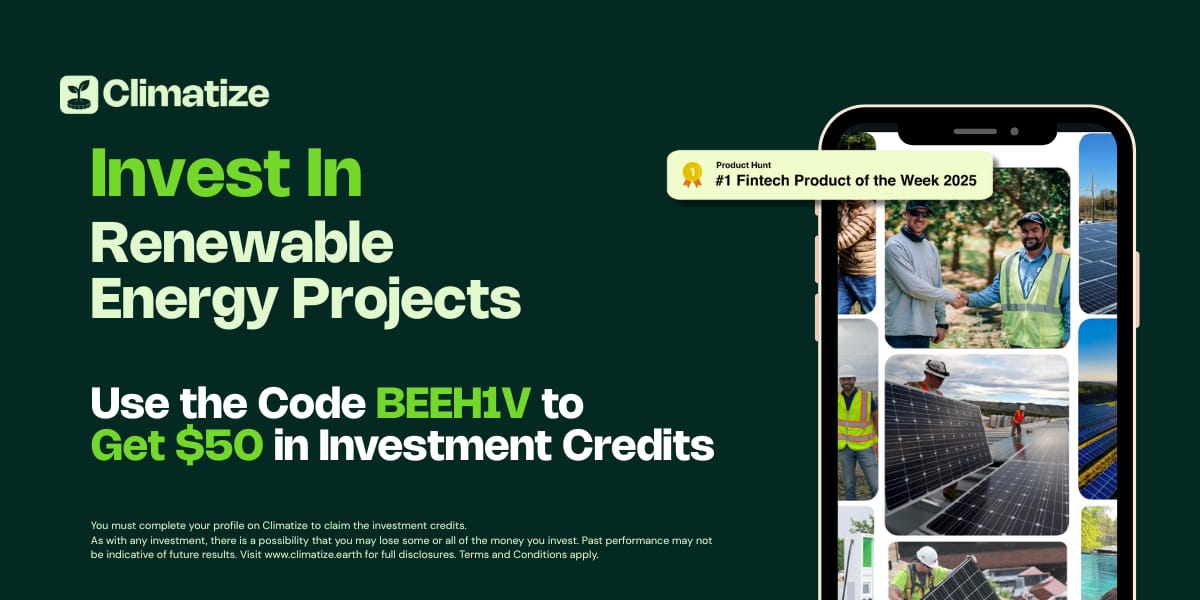
Across America, communities are being powered thanks to investors on Climatize who have committed to a brighter future.
Climatize lists vetted renewable energy investment offerings in different states.
As of November 2025, over $13.2 million has been invested across 28 projects on the platform, and over $3.6 million has already been returned to our growing community of thousands of members. Returns aren’t guaranteed, and past performance does not predict future results.
On Climatize, you can explore vetted clean energy offerings, including past projects like solar farms in Tennessee, grid-scale battery storage units in New York, and EV chargers in California. Each offering is reviewed for transparency and provides a clear view of how clean energy takes shape.
Investors can access clean energy projects from $10 through Climatize. Through Climatize, you can see and hear about the end impact of your money in our POWERED by Climatize stories.
Climatize is an SEC-registered & FINRA member funding portal. Crowdfunding carries risk, including loss.
The Price Tag – Understanding Investment Costs

there’s a price tag for investment products too
Alright, L-Plate Retirees! We've spent a good chunk of time exploring various investment vehicles and even discussed how to pick the right one for your journey using our selection framework. Now, let's talk turkey about something often overlooked but hugely important: investment costs. You wouldn't buy a car without checking the price, right? Well, the same goes for your investments! These costs, both obvious and sneaky, can eat into your returns over time, so understanding them is key to keeping more of your hard-earned cash. This directly impacts your net returns, a concept we touched upon in Risk and Return Fundamentals, and is a critical part of your Personal Financial Assessment.
First, let's tackle the Global Fee Structures. The most common is the Asset-Based Fee, a percentage of the money you have invested (Assets Under Management, or AUM). This can range from tiny fractions of a percent for passive index funds to over 2% for actively managed funds. Think of it as the fund manager's salary. These fees vary wildly by region – the US, for example, has very competitive, low fees, while some emerging markets might be pricier. Then there are Performance-Based Fees, where managers get a bonus if they beat a certain benchmark. Sounds fair, but make sure you understand the fine print, like high-water marks or hurdle rates. Understanding these fees is a core part of the Foundations of Investing.
Beyond these, you might encounter Distribution and Platform Fees, like sales charges (front-end or back-end loads) or ongoing service fees. These are often tied to how you buy the investment (e.g., through an advisor or a specific platform). The trend globally is towards greater transparency, especially with regulations like MiFID II in Europe, which aims to unbundle these costs.
Now, for the really sneaky stuff: Hidden Costs. These are less obvious but can still take a big bite out of your returns. Trading and Transaction Costs include things like brokerage commissions, exchange fees, and even stamp duties in some countries. Then there are Implicit Costs, such as Bid-Ask Spreads (the difference between what buyers are willing to pay and sellers are willing to accept) and Market Impact (when your large trade moves the price against you). These are especially significant in less liquid markets. These hidden costs directly reduce your actual return, a critical factor in evaluating investment performance.
Finally, Fund-Level Hidden Costs can include Cash Drag (the impact of uninvested cash in a fund) and Foreign Exchange Costs when investing internationally. Some funds also engage in Securities Lending, sharing the revenue with the manager – make sure you know the split!
Understanding these costs is crucial because every dollar saved in fees is a dollar earned in your pocket. It's like finding extra change in your old jacket – always a pleasant surprise! Being mindful of these costs is a fundamental principle for maximizing your wealth, as learned in Foundations of Investing.
L-Plate Takeaways
Fees Matter: Even small percentages can significantly impact your long-term returns, affecting your net returns. Always compare!
Asset-Based Fees: The most common type, a percentage of your invested money. Look for low-cost options, especially for passive investments, aligning with smart investment choices.
Hidden Costs: Don't forget trading costs, bid-ask spreads, and cash drag. These can be invisible but impactful, reducing your actual return.
Transparency is Key: Regulations are pushing for clearer fee disclosures, but it's still up to you to dig into the details, a principle of due diligence from Foundations of Investing.
Every Penny Counts: Minimizing costs means maximizing your potential returns. Be a savvy shopper forager for your money!
13 Investment Errors You Should Avoid

Successful investing is often less about making the right moves and more about avoiding the wrong ones. With our guide, 13 Retirement Investment Blunders to Avoid, you can learn ways to steer clear of common errors to help get the most from your $1M+ portfolio—and enjoy the retirement you deserve.
The L-Plate Retiree community is just beginning, and we’re figuring this out together – no pretense, no judgment, just honest conversation about navigating this next chapter.
Subscribe now, or share it with a friend, to get weekly insights, practical tips, and the occasional laugh to help you prepare for or thrive in retirement. Unlike other newsletters that assume you already know everything, we keep it simple and human.
And if today’s lifestyle musings brightened your day, you can toss a coffee into our Ko-fi tip jar ☕. Think of it like leaving a tip for your favourite busker – only this busker writes about retirement.
Because retirement doesn’t come with a manual… but now it does come with this newsletter.
The L-Plate Retiree Team
(Disclaimer: While we love a good laugh, the information in this newsletter is for general informational and entertainment purposes only, and does not constitute financial, health, or any other professional advice. Always consult with a qualified professional before making any decisions about your retirement, finances, or health.)
Reply