- L-Plate Retiree
- Posts
- Why Jumping Is One of the Best Things You Can Do for Your Bones After 50
Why Jumping Is One of the Best Things You Can Do for Your Bones After 50
New research confirms that just a few dozen jumps a few times a week can meaningfully increase bone density – and you don't need a gym, a trainer, or a particularly high pain threshold.
In partnership with


because retirement doesn’t come with a manual
Another “use it or lose it” - the same goes for muscles, brain function and your sick leave. Let’s start jumping!
CS

Tech shrugged off hot inflation, made new records, and left the Dow to fend for itself.
The quick scan: Wednesday delivered a split verdict. A hotter-than-expected Producer Price Index reading and bond yields hitting their highest levels of 2026 should have spooked markets – and they did, briefly. But tech came roaring back, pushing the S&P 500 and NASDAQ to fresh all-time highs by the close. The Dow, weighed down by financials and communications stocks, finished in the red. Two markets, one session.
S&P 500: +0.58%, 7,444.25 – A new record close, driven by a tech rebound after Tuesday's chip stock selloff
Dow Jones: -0.14%, 49,693.20 – Dragged down by Salesforce (–2.81%) and Home Depot (–2.52%); Johnson & Johnson (+2.73%) and 3M (+2.56%) couldn't plug the gap
NASDAQ: +1.20%, 26,402.34 – Another record close; Nvidia, AMD and Micron all climbed as the AI trade reasserted itself.
What's driving it: April's Producer Price Index came in hot – the 10-year Treasury yield hit 4.473%, its highest point since July 2025, while 20- and 30-year yields crossed 5% for the first time since May 2025. On any normal day, that's a headwind for equities. But markets had been braced for bad inflation news, and with Trump's Beijing summit underway – he met with President Xi Jinping on Wednesday, with Nvidia CEO Jensen Huang joining the US delegation – the prospect of eased chip export restrictions to China gave tech a lift that outweighed the bond market anxiety. Trump also flagged he planned a "long talk" about Iran with Xi, which markets interpreted as a diplomatic channel still open, even if a deal remains unsigned.
Bottom line: Two consecutive hot inflation prints – CPI on Tuesday, PPI on Wednesday – have made a Fed rate cut this year essentially impossible. A rate hike by December is now a real possibility. For L-Plate Retirees, the practical implication is straightforward: cash and short-duration bonds are earning more than they have in years, and locking in those rates before the picture changes is worth thinking about. The stock market's resilience is impressive, but it shouldn't distract from what's happening to the cost of living.

Your inbox is full. Slack is piling up. Client messages need a response yesterday. Typing thoughtful replies to all of it takes hours you don't have.
Wispr Flow turns your voice into clean, professional text you can send the moment you stop talking. Speak like you would to a colleague — tangents and all — and get polished output. Emails, Slack, LinkedIn, WhatsApp, whatever's open.
89% of messages sent with zero edits. Used by teams at OpenAI, Vercel, and Clay. Works on Mac, Windows, and iPhone.

The Fitness Advice Nobody Over 50 Expects: Jump More
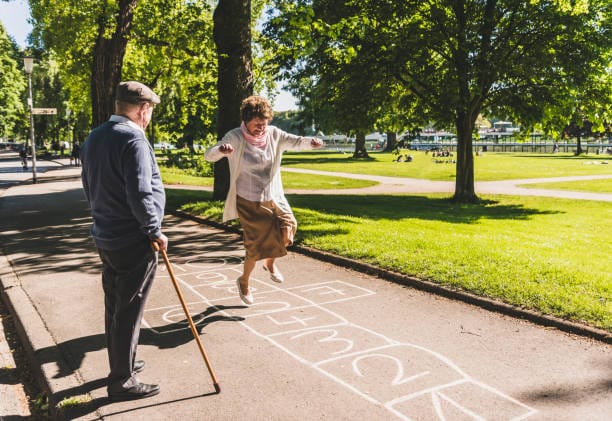
maybe I should organise this weekly social activity when I retire
The scoop: There is a particular kind of movement that children do constantly and adults abandon almost entirely by the time they hit their thirties. Not running – plenty of adults run. Not walking – that's practically a personality trait at our age. No, the movement in question is jumping.
Not jumping over anything, or jumping to conclusions, or jumping on a trampoline at a children's birthday party while trying to maintain some dignity. Just jumping. Feet leaving the ground, coming back down, impact absorbed. Repeat.
It turns out this is one of the better things you can do for your long-term health. And new research is making the case in terms that are difficult to ignore.
Why bones matter more than you think
Here's the quiet problem with bone loss: you don't feel it happening.
Unlike a pulled muscle or a sore knee, declining bone density gives you no early warning signal. It just happens – gradually, over years – until one day the consequences arrive all at once in the form of a fracture that takes far longer to heal than it would have a decade earlier.
Bone density peaks in most people by their early thirties, and then the slow decline begins. Women lose it faster and earlier than men, largely because of the sharp drop in estrogen at menopause, which disrupts the balance between osteoblasts (bone-building cells) and osteoclasts (bone-breaking cells). But men are far from immune. An estimated 44 million Americans have low bone density, and around 10 million have full osteoporosis – a condition that can cause fractures from something as innocuous as a cough.
The conventional wisdom is that weight-bearing exercise helps. What's becoming clearer from recent research is that impact – specifically, the force of landing – is the mechanism that does the real work.
What the research actually shows
When your feet hit the ground after a jump, your skeleton absorbs a mechanical force. This force travels through bone tissue and activates sensors within bone cells, triggering a process called mechanotransduction – the conversion of physical force into biological signals that tell the body to lay down new bone. It's the skeleton's version of "use it or lose it."
The numbers are encouraging. A meta-analysis of 18 trials with more than 600 participants found a 1.5% improvement in bone mineral density at the femoral neck – one of the most fracture-prone parts of the hip – from jump training. A 2014 study found that just 10 high-impact jumps twice a day over four months was enough to significantly increase hip bone density in women aged 25 to 50. A Loughborough University clinical trial confirmed that postmenopausal women aged 55 to 70 could safely build hip bone density through home-based jumping protocols.
"A little bit of jumping two or three times a week could go a long way in benefiting your bone health throughout your lifespan," said Pam Bruzina, a professor of nutrition and exercise physiology at the University of Missouri and lead author of a 12-month clinical trial published in the journal Bone. Her study showed that middle-aged men with low bone mass gained measurable bone density after a year of jump training – three sessions a week, 20 to 30 minutes per session.
Improvements, she noted, may be visible in bone scans in as little as six months.
The form matters – and so does rest between jumps
Not all jumps are equal, and this is worth knowing before you simply start bouncing around your living room.
The goal is to maximise the impact of landing, because that's what loads the skeleton. Explosive jumps – up and down, side to side, or box jumps stepping up and jumping down – all generate the kind of ground reaction force that stimulates bone growth. Jumping rope, counterintuitively, is not the best option here. Because the point is the landing, and rope jumping tends to minimise it.
Perhaps the more surprising finding is that rest between jumps matters. "The bone responds best when there's a small rest between each loading cycle," said Bruzina. Jumping continuously reduces the mechanical signal. Ten jumps, a brief pause, ten more – that structure is more effective than 30 consecutive jumps without stopping.
A note on safety – especially for those already at risk
Here is where the enthusiasm needs a small qualifier.
If you have existing joint pain, or if you've been largely sedentary, jumping straight into a regular jump training programme without preparation is not ideal. A few months of resistance training to strengthen the muscles around the hip and spine first will give your joints the support they need to handle impact safely.
If you have been diagnosed with osteoporosis, the advice from doctors is to avoid jumping without supervision – at least initially. The very fragility that makes jumping important to address is also the reason to be careful about how you begin.
For everyone else – particularly those in the 45 to 65 range with no bone diagnosis but a quiet awareness that their skeleton isn't getting any younger – the barrier to entry is genuinely low. A few dozen jumps, a few times a week, on a firm surface, with a pause between sets.
"Any intervention that slows that loss or mitigates it is better than nothing," said Jocelyn Wittstein, an associate professor of orthopedic surgery at Duke University School of Medicine. "Any load-bearing activity on your legs is better than being sedentary."
That's not a particularly dramatic conclusion. But most of the best health advice isn't.
Actionable Takeaways for L-Plate Retirees
Start with 10 jumps twice a day, a few times a week. That is the dosage that produced measurable hip bone density improvements in research participants. It takes less than two minutes. Do it before your morning coffee if habit-stacking helps. The floor of your kitchen will do fine.
Pause between sets – don't jump continuously. A brief rest between each set of 10 lets the bone cells respond properly to the mechanical signal. Continuous jumping reduces the stimulus. Less, with rests, works better than more without.
Choose explosive, landing-focused jumps over rope jumping. Up-and-down, side-to-side, or step-up-and-jump-down movements maximise ground impact, which is the mechanism driving bone growth. Rope jumping, despite its reputation, minimises the landing and misses the point.
Build muscle first if you're starting from scratch. A few months of squats, lunges and resistance exercises around the hips and spine before beginning jump training will protect your joints and make the programme sustainable. Jumping into it without that foundation increases injury risk.
If you have osteoporosis, get guidance before starting. This is not a reason to avoid jumping – it's a reason to begin supervised. A physiotherapist or exercise physiologist can design a programme appropriate to your bone density and joint health.
Think of this as skeleton maintenance, not athletic training. The mindset shift matters. You are not trying to become an athlete. You are trying to give your bones a reason to stay dense. That is a modest, achievable, and genuinely important goal – and a few dozen jumps a week is enough to make a difference.
Your Turn:
Bone density is one of those things most of us don't think about until there's a problem. Has it been on your radar, or is this the first time you've thought seriously about it?
Did anything in today's issue change the way you're thinking about exercise – specifically the idea that impact, not just movement, is what the skeleton responds to?
If you were going to add 10 jumps to your day, where would you fit them – and what would make it more likely that you'd actually do it?
👉 Hit reply and share your story – your insights could inspire fellow readers in future issues.
Writing this takes considerably more time than drinking coffee. If you'd like to help balance that equation, consider supporting L-Plate Retiree on Ko-fi.
Men Age Differently. Most Find Out Too Late.
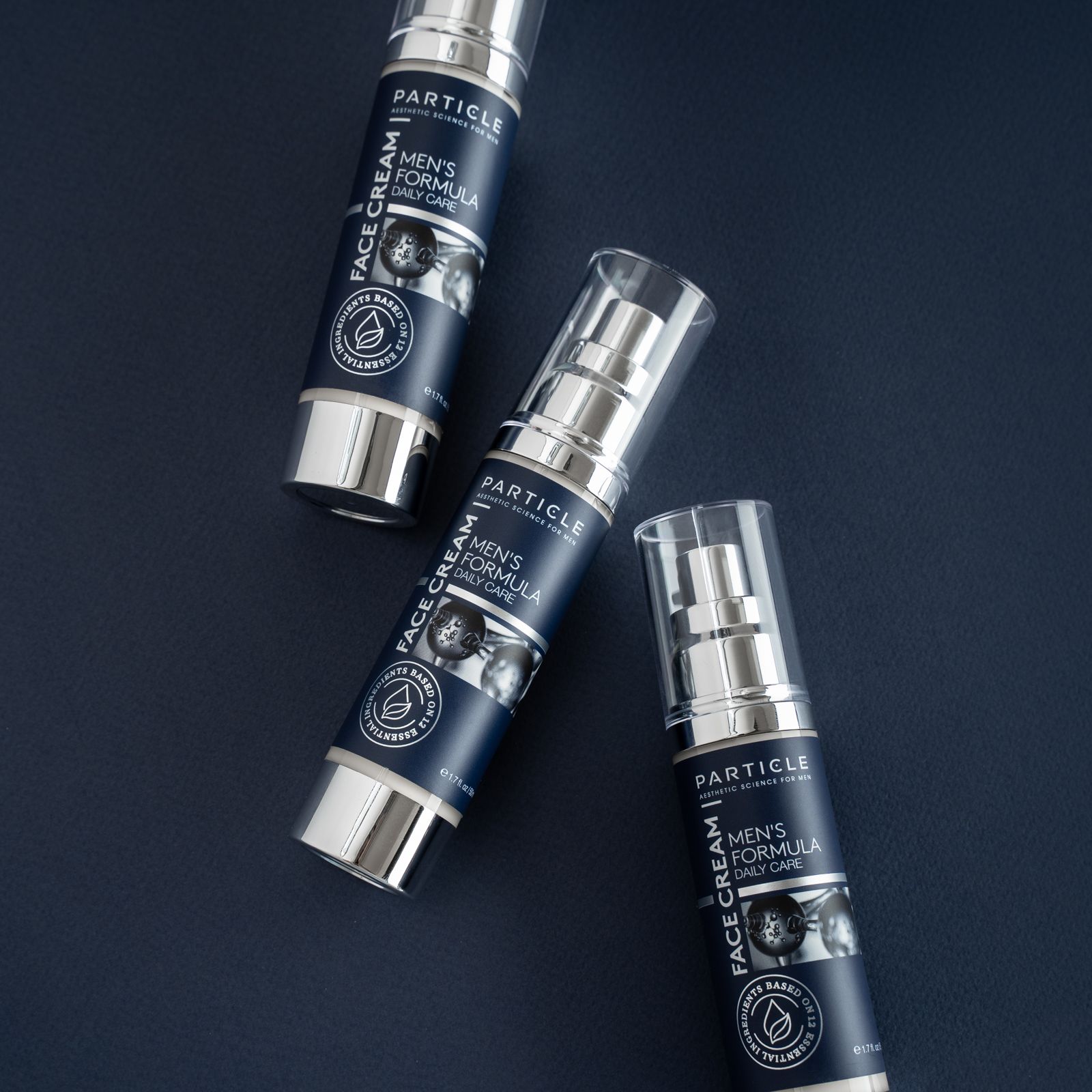
Most men don't think about their skin until eye bags, dark spots, and wrinkles seem to appear all at once. Particle Face Cream was engineered for exactly this. Premium anti-aging ingredients, one formula, trusted by over a million men. No complicated routine. Get 20% off now with the code BH20.
If these insights resonate with you, you’re in the right place. The L-Plate Retiree community is just beginning, and we’re figuring this out together – no pretense, no judgment, just honest conversation about navigating this next chapter.
Subscribe now to receive daily insights, practical tips, and the occasional laugh to help you thrive in retirement. We speak human here – no jargon without explanation, no assuming you’ve been investing since kindergarten.
And if today’s investing note hit the spot, you can buy us a coffee on Ko-fi ☕. Consider it your safest trade of the week – low risk, high return (in good vibes).
Because retirement doesn’t come with a manual… but now it does come with this newsletter.
The L-Plate Retiree Team
(Disclaimer: While we love a good laugh, the information in this newsletter is for general informational and entertainment purposes only, and does not constitute financial, health, or any other professional advice. Always consult with a qualified professional before making any decisions about your retirement, finances, or health.)
Reply