- L-Plate Retiree
- Posts
- Why You Keep Breaking Your Own Resolutions (It's Not Laziness)
Why You Keep Breaking Your Own Resolutions (It's Not Laziness)
Willpower depletes, vision inspires but habit governs, and the deepest behavioural change tends to come from love rather than discipline. Here's what that actually looks like.
In partnership with


because retirement doesn’t come with a manual


is your willpower dependent on this?
I heard something this week that I've been stewing on.
It came from a sermon – bear with me, this isn't going where you think – based on a single line from the Apostle Paul, written almost two thousand years ago. Paul, who by any measure was one of the most disciplined, driven, purposeful people who ever lived, wrote this:
For the good that I want to do, I do not. And the evil that I don't want to do – that's what I do.
Two thousand years. And we still underline it.
Because every one of us knows that gap. The distance between the person we intend to be when we wake up at 6am, full of resolution, and the person we actually are by 10pm when we've somehow eaten the thing, said the thing, skipped the thing, or stayed up watching the thing we said we wouldn't watch.
We are sold a version of self-improvement that goes roughly like this: you lack discipline, you need more of it, here are twelve ways to get it. The implication is that the gap between who you are and who you want to be is simply a matter of trying harder.
But the science doesn't hold this up – and neither, it turns out, does two thousand years of honest human testimony.
Willpower depletes. Research on what psychologists call "ego depletion" has shown consistently that self-control is more like a muscle that fatigues than a character trait you either have or don't. The more decisions you make, the more discipline you exert, the less you have available later. This is why good intentions made in the morning so often evaporate by evening.
But here's the more interesting problem. The preacher I was listening to this week said something that stopped me: the problem is not ignorance. Paul knows the good he should be doing. The problem is alignment. Knowledge informs the mind but it does not automatically transform the will.
You can know exactly what you should do and still not do it. Every person who has ever been told by a doctor that they need to change their diet, lose weight, move more – and then hasn't – knows this precisely. The knowing isn't the problem. Something else is.
Vision inspires us, the preacher said, but habit governs us.
And that's why New Year's resolutions fail. Not because the person making them is weak or lacks character. But because a resolution is an act of vision, and vision alone doesn't have the horsepower to overwrite a habit that has been forming quietly for years.
There's a phrase from the sermon I keep returning to: desire without power leads to frustration.
That is precisely the texture of a failed resolution. You wanted it. You genuinely wanted it. And then the gap between wanting and doing opened up underneath you, and you fell in, and you felt the particular shame of having failed at something you publicly committed to, which makes you less likely to try again.
This is not a character problem. It is an architecture problem. The habits, the environment, the emotional associations, the learned responses – all of it is operating below the level of conscious intention, and it runs faster and quieter than willpower can manage.
What the preacher was pointing toward – and where I think he said something genuinely interesting regardless of your theology – is this: the deepest changes in behaviour don't tend to come from trying harder. They come from loving something more.
Paul's famous question, when he reaches his point of frustration, is: Who will deliver me?
Not what. Who.
The preacher made a meal of this distinction, and rightly so. He was talking about Jesus – but the observation underneath it is not exclusively theological. When he said your deliverance and your power come not from a system but from a person, what he was describing is something psychologists and therapists have also observed: the most durable behavioural change tends to be tethered to relationship, not to rules.
People quit smoking for their children. They change their diet after a health scare that frightens the person they love. They moderate their drinking not from information about liver function, but because they don't want to be a certain kind of person in front of someone who matters to them.
Love – and I mean this in the broadest sense, the love of a person, a community, a purpose, a set of values that have become identity – exerts a kind of governance over behaviour that willpower cannot. It's not discipline. It's not even motivation. It's more like a compass that's always slightly pulling you in a direction.
The preacher described this through his marriage. His wife has become ill, less able to do the things she once did. He said he loves her more now than when they married. Not for reasons. The reasons have long since dissolved. We love each other for no reason. And that love – unconditional, without conditions that can be violated – is what shapes how he moves through the world. Not rules. Not intentions. Love.
For him, that governing love extends to God. That's his faith and his testimony, and I'm not going to paraphrase my way around it. For others reading this, it might be a person, a community, an ancestor, a set of values so internalised they've become bone-deep. The form varies. The mechanism seems remarkably similar.
I'm not suggesting willpower is worthless. You still have to show up. You still have to make the choice, again and again.
But if you've been in the gap – the exhausting space between the person you mean to be and the person you keep being – it might be worth asking a different question than how do I try harder?
What do you love enough that it changes how you carry yourself? Who are you trying not to disappoint? What version of your life, your health, your relationships, your retirement, would make you feel that you had honoured something that genuinely matters to you?
The pastor's line that stayed with me most: if you get the right person speaking into your life, the tension and its power over you decreases, and the good that you want to do, you start doing on a more regular basis.
I think there's something in that. Not magic. Not a system. Just the quietly powerful influence of being oriented toward something – or someone – worth orienting toward.
The good I keep meaning to do. I haven't solved it.
But I think I've been asking the wrong question.
What's your gap? The thing you keep meaning to do and keep not doing.
👉 Hit reply and share your thoughts – I’d love to hear what’s resonating with you.
☕ If these Sunday reflections are worth something to you, consider buying L-Plate Retiree a coffee on Ko-fi.
White Castle is Now Expanding at .001% the Cost
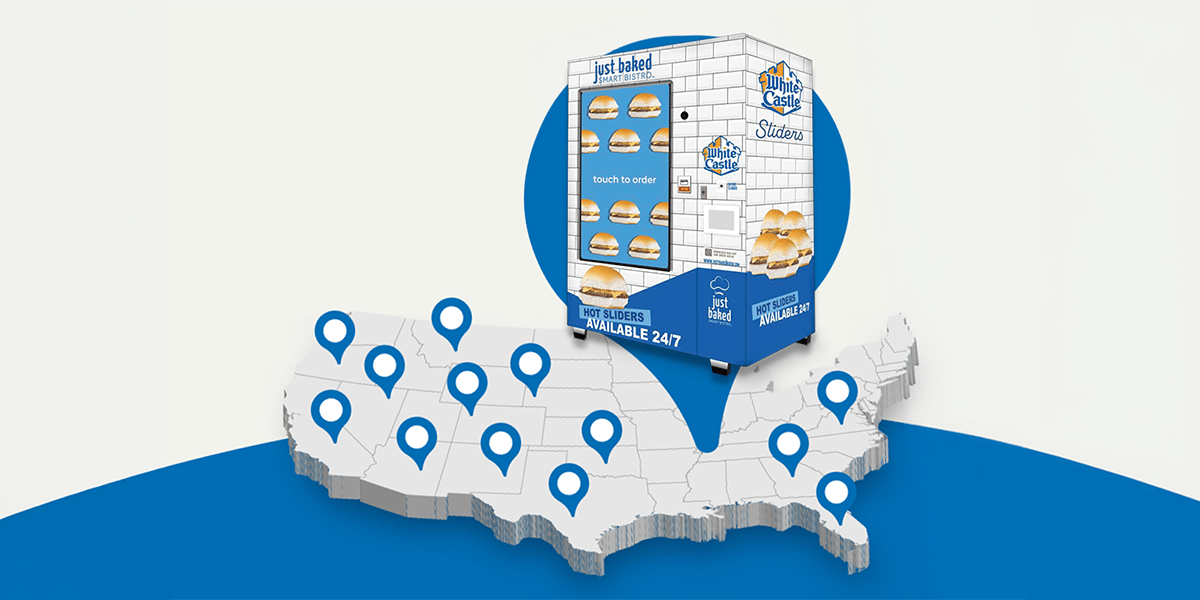
No, not with new brick-and-mortar stores. With robotic kiosks from ART.
ART, aka Automated Retail Technologies, makes serving food 24/7 possible for brands like White Castle at .001% the cost of a new brick-and-mortar.
Their robotic kiosks dish out customers favorite dishes, like warm White Castle sliders, on demand in seconds.
That makes entering new markets a three-step process. Plug it in. Stock it. Turn it on. And it isn’t just White Castle benefitting.
Other big-name food brands like Nestlé and Macaroni Grille partnered too, and foodservice behemoths like Sysco and Aramark also use it. Even better, until April 25, you can earn guaranteed bonus stock as an early-stage ART investor and share in their growth.
This is a paid advertisement for Automated Retail Technologies Regulation CF offering. Please read the offering circular at https://invest.automatedrt.com/
The Portfolio Tune-Up – Rebalancing for Success

rebalance your portfolio every time you send your car for a tune-up?
So, we've set our Asset Allocation and diversified globally. But a portfolio isn't a "set-it-and-forget-it" machine. It needs regular maintenance to stay on track. This is where Portfolio Rebalancing comes in. Think of it as a regular tune-up for your investment engine.
Rebalancing is the simple act of realigning your portfolio back to its original target Asset Allocation. Why is this so important? Because over time, market movements cause your portfolio to "drift." If stocks have a great year, their proportion in your portfolio will grow, making your portfolio riskier than you intended. If bonds do well, your portfolio might become too conservative.
Rebalancing forces you to follow the golden rule of investing: buy low and sell high. You systematically sell some of the assets that have performed well (selling high) and use the proceeds to buy more of the assets that have underperformed (buying low). This disciplined approach prevents you from getting carried away by market euphoria or panicking during a downturn, a key principle from our discussion on Behavioral Finance.
There are two main ways to rebalance:
Time-Based Rebalancing: You rebalance at fixed intervals, like annually or quarterly. This is simple, predictable, and easy to automate.
Threshold-Based Rebalancing: You rebalance only when an asset class deviates from its target by a certain percentage (e.g., 5%). This method is often more tax-efficient and reduces transaction costs, as you only trade when necessary.
Important Considerations:
Transaction Costs: Every trade costs money. Be mindful of brokerage fees and other costs.
Tax Implications: Selling appreciated assets can trigger capital gains taxes. Consider rebalancing within tax-advantaged accounts (like a 401(k) or IRA) to avoid this.
Market Volatility: In highly volatile markets, you might need to rebalance more frequently or use wider tolerance bands.
By consistently rebalancing, you ensure your portfolio stays aligned with your risk tolerance and long-term goals, making it a cornerstone of disciplined investing.
L-Plate Takeaways:
Rebalancing is Risk Management: It keeps your portfolio aligned with your target asset allocation and desired risk level.
Buy Low, Sell High: Rebalancing forces you to sell assets that have done well and buy those that have underperformed.
Choose Your Method: Rebalance based on a set time (e.g., annually) or when an asset class drifts by a certain percentage.
Mind the Costs: Be aware of transaction costs and tax implications when you rebalance.
Discipline is Key: Rebalancing is a systematic way to remove emotion from your investment decisions, reinforcing the lessons from Behavioral Finance.
A Senior Analyst Sees Half a Billion Dollar Potential.
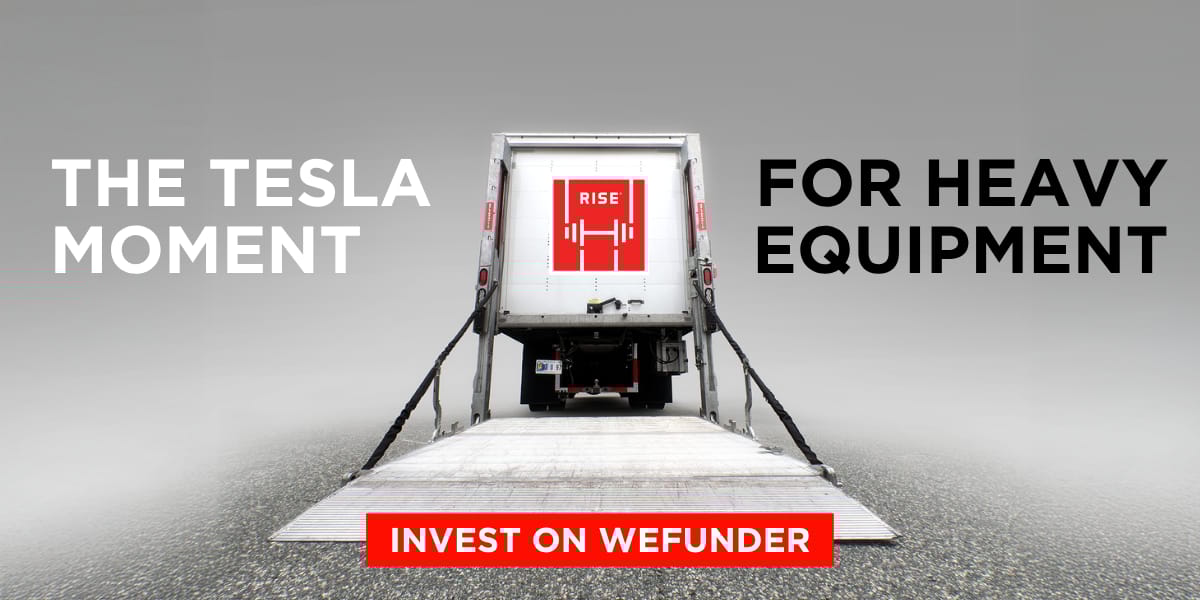
Kingscrowd Capital's senior analyst reviewed RISE Robotics and projected potential growth to a $500 million valuation. The community round is open now on Wefunder. You don't have to be an institutional investor to get in at today's price.
The L-Plate Retiree community is just beginning, and we’re figuring this out together – no pretense, no judgment, just honest conversation about navigating this next chapter.
Subscribe now, or share it with a friend, to get weekly insights, practical tips, and the occasional laugh to help you prepare for or thrive in retirement. Unlike other newsletters that assume you already know everything, we keep it simple and human.
And if today’s musings brightened your day, you can toss a coffee into our Ko-fi tip jar ☕. Think of it like leaving a tip for your favourite busker – only this busker writes about retirement.
Because retirement doesn’t come with a manual… but now it does come with this newsletter.
The L-Plate Retiree Team
(Disclaimer: While we love a good laugh, the information in this newsletter is for general informational and entertainment purposes only, and does not constitute financial, health, or any other professional advice. Always consult with a qualified professional before making any decisions about your retirement, finances, or health.)
Reply